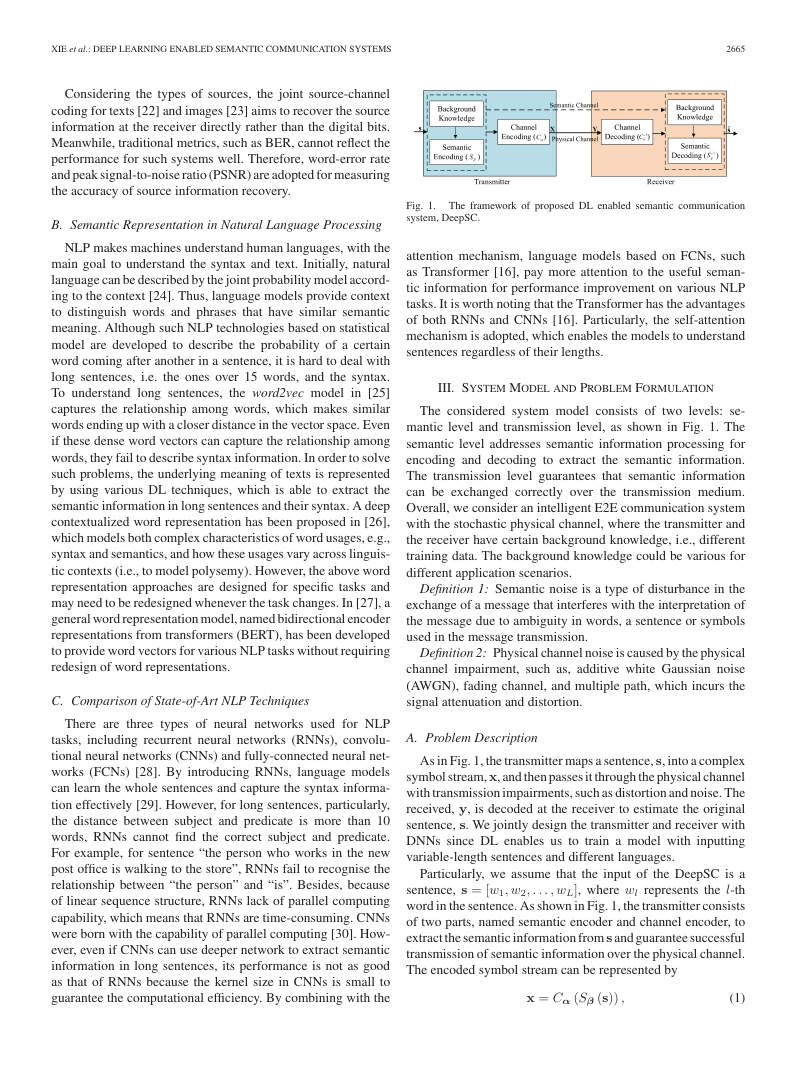
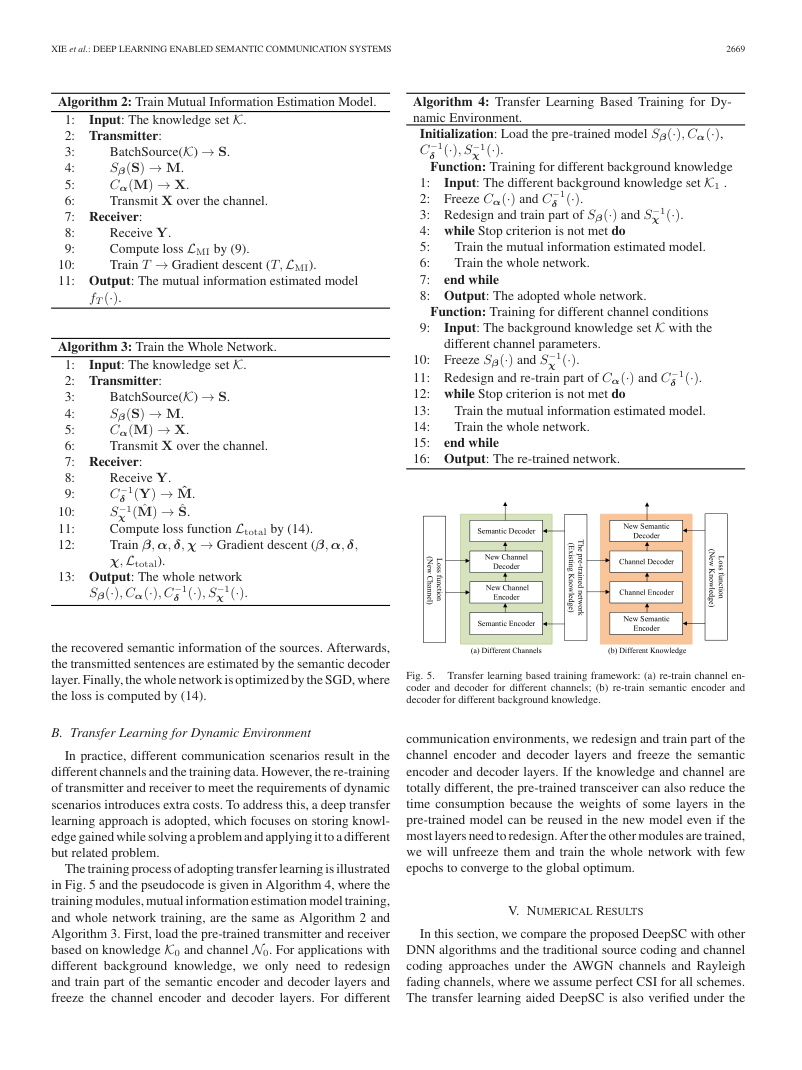
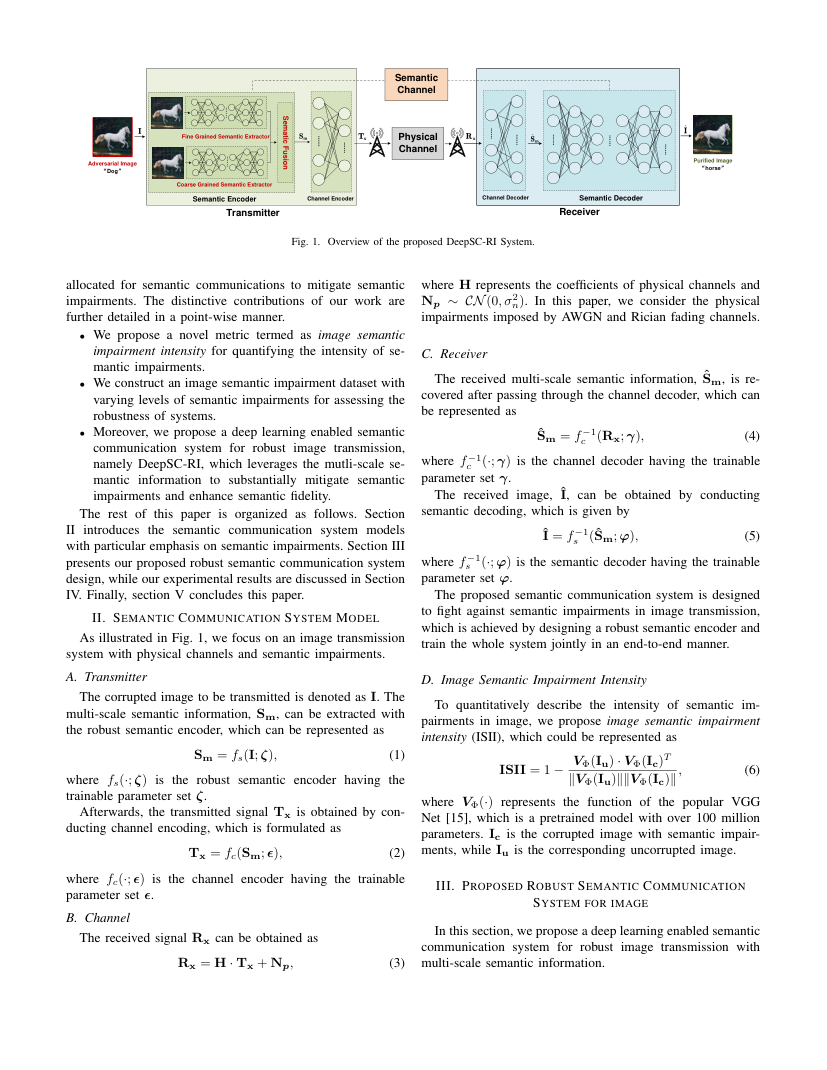
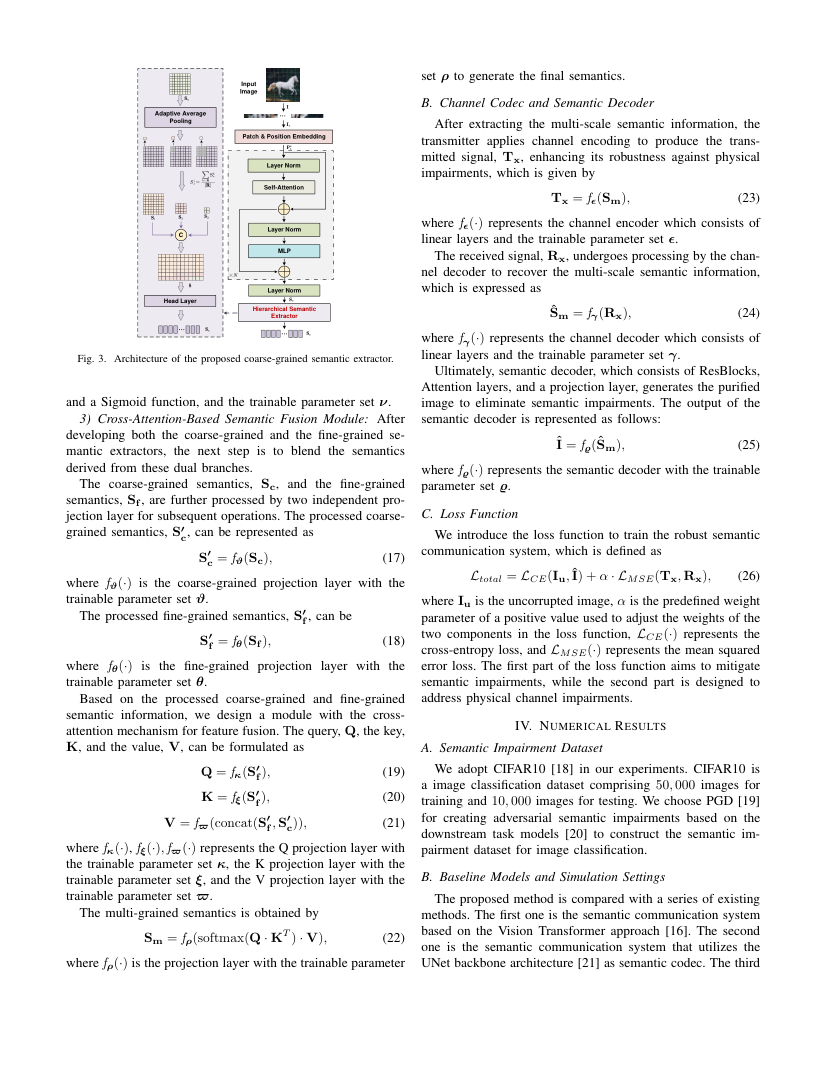
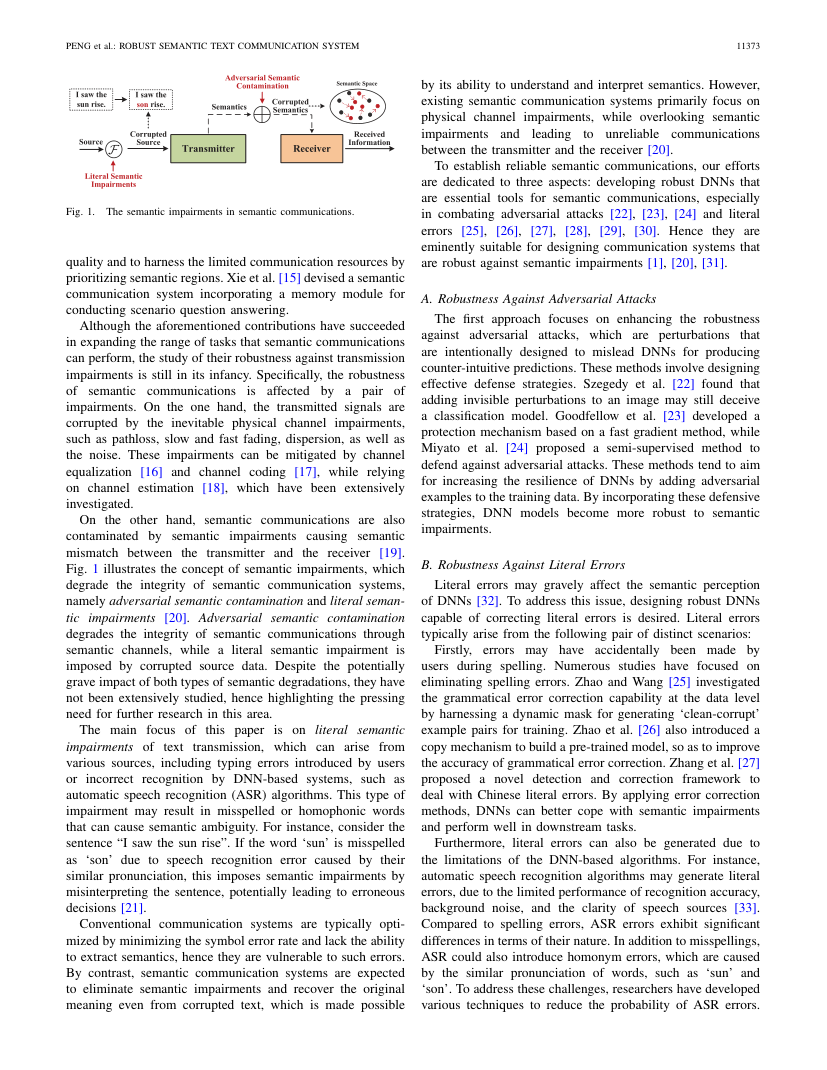
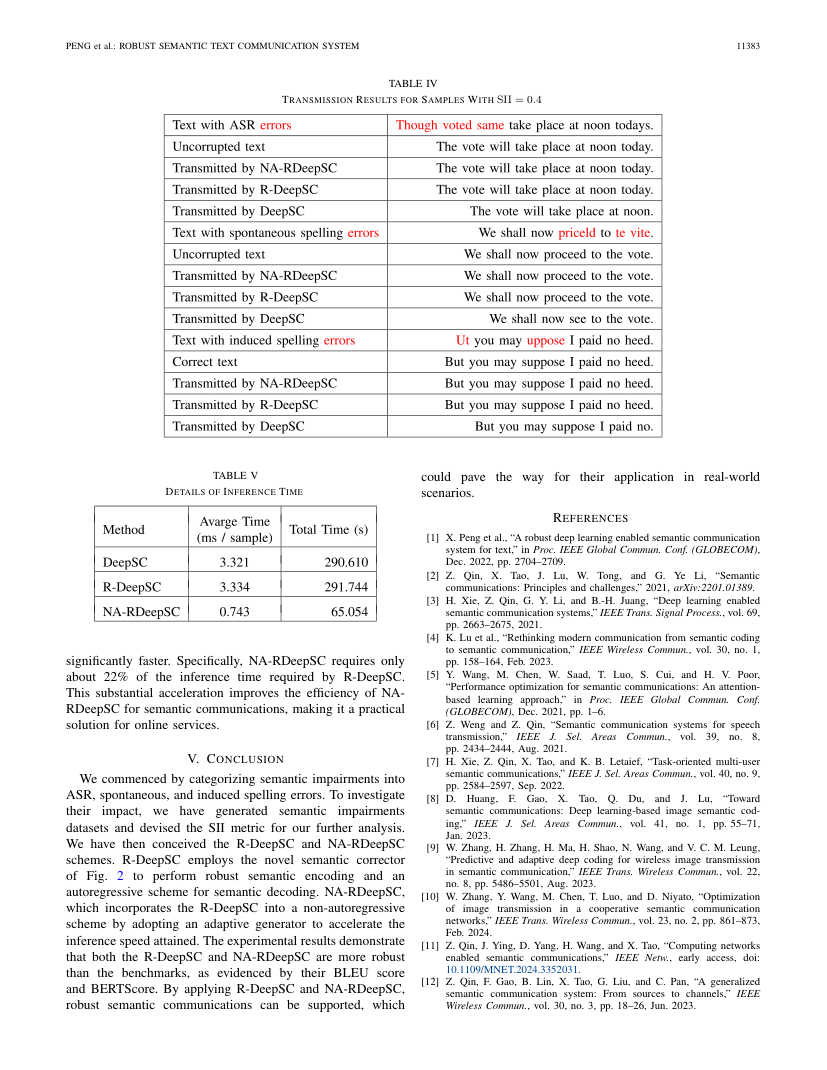
现有进展:在本文之前,相关研究已确立,近年来,深度学习支持的端到端通信系统已被开发出来,将传统通信系统中的所有物理层块合并,从而实现联合收发器优化。 PDF p.1PDF p.2
仍然存在的问题:此外,这些应用需要支持大规模连接且频谱资源有限,但延迟较低,这对传统的信源信道编码构成了关键挑战。 PDF p.1PDF p.2PDF p.8
为什么已有方法解决不了:分离的压缩和信道编码,或忽略论文目标语义因子的端到端模型,可以优化不匹配的中间目标。所得表示并未明确针对此处研究的联合带宽、功耗、信道和语义质量约束而塑造。更具体地说,已有链路缺乏后来引入的论文特有机制:具体来说,发射器由一个语义编码器组成,用于从待传输文本中提取语义特征,以及一个信道编码器,用于生成符号以便后续传输。 PDF p.1PDF p.2PDF p.8
为什么这个问题值得研究:问题之所以重要,是因为有限的信道使用迫使系统选择保护哪些视觉信息。感知或域关键结构可能比平均像素保真度更有价值,尤其是在低信噪比或高压缩率下。 PDF p.1PDF p.2
本文怎样顺着问题提出方案:因此,本文发展了深度学习赋能语义通信系统。其具体设计总结如下:具体来说,我们提出了一种基于深度学习的语义通信系统,名为DeepSC,用于文本传输。 PDF p.1PDF p.2
方案为什么有可能起作用:因果联系在于,发射器由一个语义编码器组成,用于从待传输文本中提取语义特征,以及一个信道编码器,用于生成符号以促进后续传输。语义保真度和信道鲁棒性在同一路径上得到优化,因此瓶颈针对实际噪声链路而形成。 PDF p.1PDF p.2PDF p.3
作者希望证明什么:论文测试了这种因果机制是否经得起公平的通信比较。报告的证据是:与不考虑语义信息交换的传统通信系统相比,拟议的DeepSC对信道变化更具鲁棒性,能够实现更好的性能,尤其是在低信噪比(SNR)区域,这一点由广泛的仿真结果所证明。 PDF p.5PDF p.6PDF p.8
系统怎么工作
该系统是图像传输或生成的端到端通信链路。特别是,我们提出了一种基于深度学习的语义通信系统,名为DeepSC,用于文本传输。具体来说,发射器由一个语义编码器组成,用于从待传输文本中提取语义特征,以及一个信道编码器,用于生成符号以便后续传输。关键在于学习到的表征如何与所说的信道和资源约束相连接,而不仅仅是使用更大的神经网络。 PDF p.1PDF p.2PDF p.3
输入:源是输入图像。 PDF p.1PDF p.2PDF p.3
发送端:发送方应用论文的语义/信源信道编码器:具体来说,发送器由一个语义编码器组成,用于从待传输文本中提取语义特征,以及一个信道编码器,用于生成符号以便后续传输。 PDF p.1PDF p.2PDF p.3
实际发送:传输对象是功率归一化的实数或复值神经信道符号。 PDF p.1PDF p.2PDF p.3
信道:传输遵循论文中评估的信道/资源模型;其处理方式总结为带噪连续 潜在/复信道符号端到端联合训练。 PDF p.2PDF p.3PDF p.4
接收端:接收端从可微信道或均衡器之后的噪声连续符号开始,应用所提出的解码器、推理模型或生成器。 PDF p.1PDF p.2PDF p.3
这些实验使用Europarl;与Turbo、BERT、DeepSC比较;评估标准为PSNR、蓝图(BLEU)、准确性、语义相似性、延迟、BER、SER;并使用AWGN、Rayleigh、Rician、衰落信道、MIMO、擦除信道、QAM。一个代表性的报告工作条件是:必须同时读取精确的信噪比、带宽比和功耗约束,并附带相应的结果数据。 PDF p.2PDF p.3PDF p.4
与不考虑语义信息交换的传统通信系统相比,所提的DeepSC对信道变化更具鲁棒性,能够实现更好的性能,尤其是在低信噪比(SNR)区间,这一点由广泛的仿真结果所证明。 PDF p.5PDF p.6PDF p.8
现有进展:在此之前,相关研究已证明语义通信通过探索语义信息可以显著提升传输效率。 PDF p.1PDF p.2PDF p.3
仍然存在的问题:即使支持DL的通信系统在某些场景和条件下提供了更好的性能和/或更低的复杂度,其最先进的模型主要关注比特或符号层面的性能提升,通常以比特错误率(BER)或符号错误率(SER)作为性能指标。 PDF p.1PDF p.8
为什么已有方法解决不了:位级目标将每个位错误视为同一事件,无法确定更改的位是否改变了句子意义、语音清晰度或任务决策。添加更强的常规代码可能会降低BER,但并不能直接优化语义扭曲。更具体地说,早期的流程缺乏本文随后引入的论文专用机制:注意力机制背后的动机是在训练神经网络时,通过赋予重要的语音信息更高的权重来识别它们。 PDF p.1PDF p.8
为什么这个问题值得研究:这个问题很重要,因为即使波形失真仅有轻微变化,可理解性、识别准确性和丢包隐蔽也可能崩溃;一个有用的系统必须在低比特率和信道误差下保持语言内容。 PDF p.1PDF p.2PDF p.3
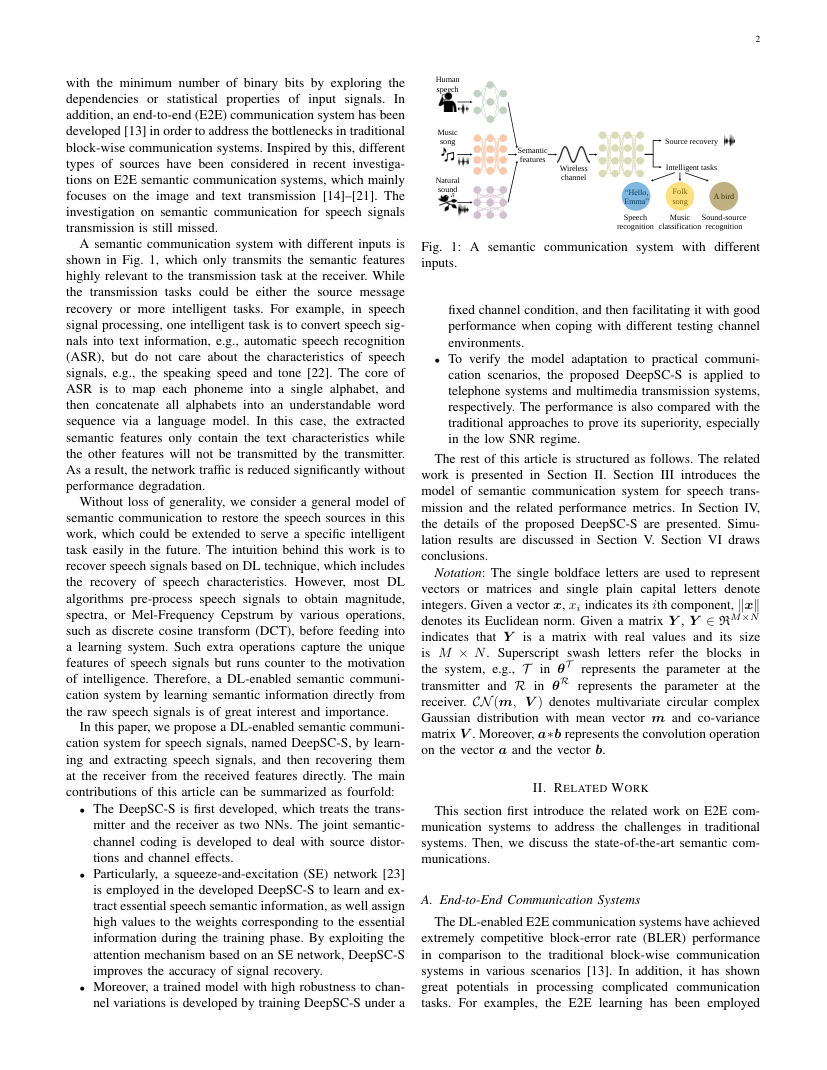
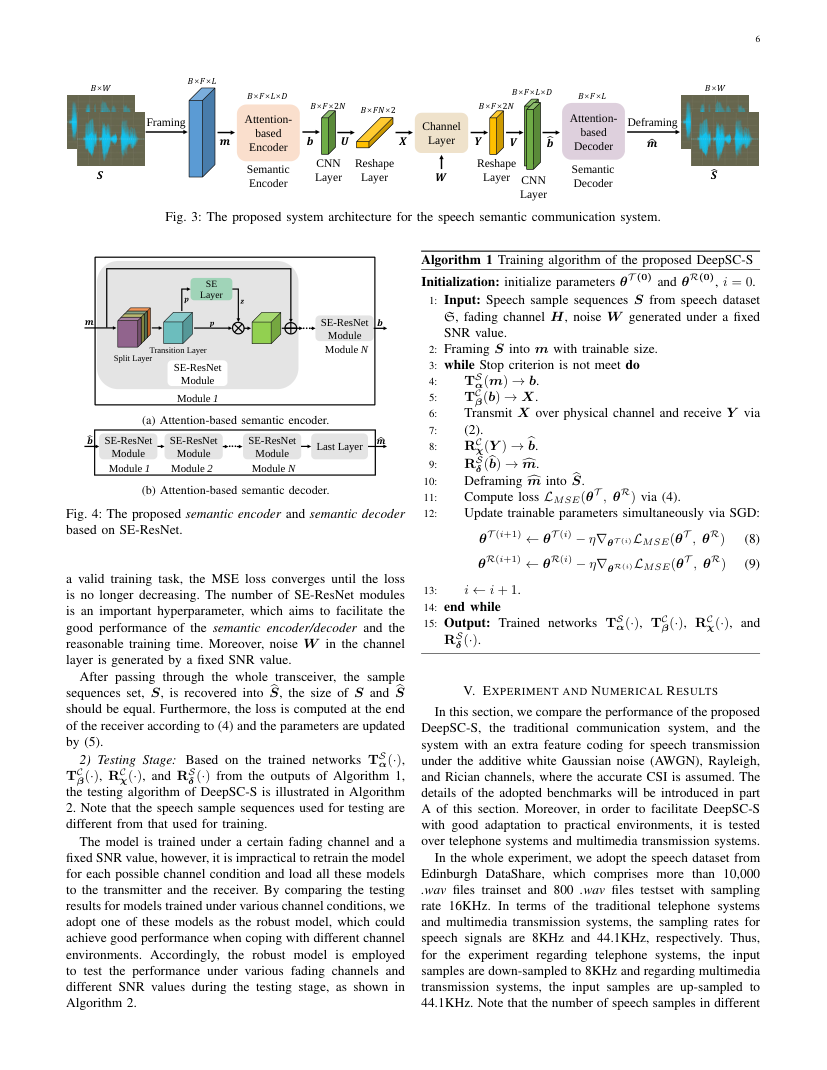
本文怎样顺着问题提出方案:因此,本文开发了语音传输的语义通信系统。其具体设计总结如下:具体来说,我们设计了一个支持深度学习(DL)的语音信号语义通信系统,名为DeepSC-S。 PDF p.1PDF p.2PDF p.3
方案为什么有可能起作用:因果关系在于,注意力机制背后的动机是在训练神经网络时,通过赋予其更高权重来识别关键语音信息。语义保真度和信道鲁棒性在同一路径上得到优化,因此瓶颈针对实际噪声链路而形成。 PDF p.1PDF p.2PDF p.3
作者希望证明什么:论文测试了这种因果机制是否经得起公平的通信比较。报告的证据是:模拟结果表明,我们提出的DeepSC-S在语音信号指标(如信号与失真比和语音失真感知评估)方面均优于传统通信。 PDF p.4PDF p.5PDF p.6
系统怎么工作
该系统是语音/音频传输或识别的端到端通信链路。特别是,我们设计了一个支持深度学习(DL)的语音信号语义通信系统,名为DeepSC-S。这种注意力机制背后的动机,是在训练神经网络时通过赋予它们更高的权重来识别关键语音信息。关键在于学习到的表征如何与所说的信道和资源约束相连接,而不仅仅是使用更大的神经网络。 PDF p.1PDF p.2PDF p.3
输入:信号来源是语音或音频。 PDF p.1PDF p.2PDF p.3
发送端:发送者应用论文的语义/信源信道编码器:注意力机制背后的动机是在训练神经网络时通过赋予重要言语信息更高的权重来识别它们。 PDF p.1PDF p.2PDF p.3
实际发送:传输对象是功率归一化的实数或复值神经信道符号。 PDF p.1PDF p.2PDF p.3
信道:传输遵循论文中评估的信道/资源模型;其处理方式总结为带噪连续 潜在/复信道符号端到端联合训练。 PDF p.4
接收端:接收端从可微信道或均衡器之后的噪声连续符号开始,应用所提出的解码器、推理模型或生成器。 PDF p.1PDF p.2PDF p.3
实验使用论文中所述的源/任务数据集;与DeepJSCC、Turbo、DeepSC比较;评估准确性、潜伏期、BER、SER;并使用AWGN、Rayleigh、Rician、衰落信道、MIMO、OFDM、QAM。一个代表性的报告工作条件是:必须同时读取精确的信噪比、带宽比和功耗约束,并附带相应的结果数据。 PDF p.4
模拟结果表明,我们提出的DeepSC-S在语音信号指标(如信号与失真比和语音失真感知评估)方面均优于传统通信。 PDF p.4PDF p.5PDF p.6
现有进展:在这篇论文之前,相关研究领域已经确立了语义通信侧重于语义特征的传递。 PDF p.1PDF p.2
仍然存在的问题:大多数语义编解码器设计为点对点链路,不利用跨用户语义关联,也不共同处理异构信道、干扰和用户公平性。 PDF p.1PDF p.2PDF p.4
为什么已有方法解决不了:为每个用户独立运行点对点语义编解码器,会忽略共享内容、异构信道、干扰和公平性。因此,一旦用户共享同一媒介,单用户最优方案不必是可行或频谱高效的。更具体地说,已有链路缺少本文随后引入的论文特有机制:具体来说,MU-DeepSC的收发器是联合设计和优化的,用于捕获相关多模态数据中的特征,用于任务导向传输。 PDF p.1PDF p.2PDF p.4
为什么这个问题值得研究:这个问题很重要,因为边缘设备往往需要及时做出决策,而不是忠实的复制品。仅发送任务足够的信息可以减少无线资源占用和延迟,但前提是关键证据能通过信道保存。 PDF p.1PDF p.2
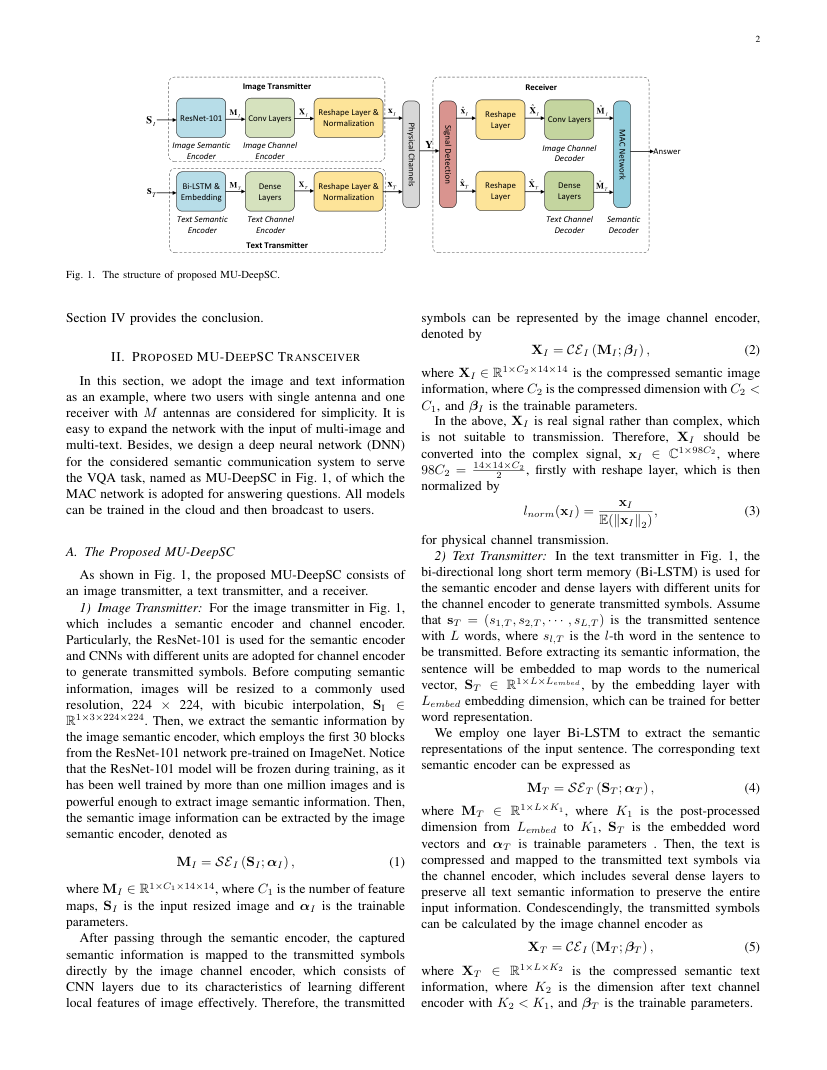
本文怎样顺着问题提出方案:因此,本文开发了面向任务的多用户语义通信(VQA)。其具体设计总结如下:为了利用多用户多模态数据之间的相关性,我们提出了一个深度神经网络支持的语义通信系统,名为MU-DeepSC,以执行视觉问答(VQA)任务为例。 PDF p.1PDF p.2
方案为什么有可能起作用:其因果联系在于,MU-DeepSC的收发器是联合设计和优化的,用于捕获相关多模态数据中的特征,用于任务导向传输。跨用户相关性和异构链接现在形成了联合传输的表示,而非重复的独立消息。 PDF p.1PDF p.2
作者希望证明什么:论文测试了这种因果机制是否经得起公平的通信比较。报告的证据是:模拟结果表明,所提议的MU-DeepSC对信道变化的鲁棒性优于传统通信系统,尤其是在低信噪比(SNR)区域。 PDF p.3PDF p.4PDF p.5
系统怎么工作
该系统是任务导向推理的端到端通信链路。为了利用多用户多模态数据之间的相关性,我们提出了一个名为MU-DeepSC的深度神经网络支持语义通信系统,用于执行视觉问答(VQA)任务。具体来说,MU-DeepSC的收发器是联合设计和优化的,用于从相关多模态数据中捕获特征,以实现面向任务的传输。关键在于学习到的表征如何与所说的信道和资源约束相连接,而不仅仅是使用更大的神经网络。 PDF p.1PDF p.2
输入:源数据是源数据以及一个下游任务。 PDF p.1PDF p.2
发送端:发送方应用论文的语义/信源信道编码器:具体来说,MU-DeepSC的收发器是联合设计和优化的,用于捕获相关多模态数据中的特征,用于任务导向传输。 PDF p.1PDF p.2
实际发送:传输对象是功率归一化的实数或复值神经信道符号。 PDF p.1PDF p.2
信道:传输遵循论文中评估的信道/资源模型;其处理方式总结为带噪连续 潜在/复信道符号端到端联合训练。 PDF p.2PDF p.3
接收端:接收端从可微信道或均衡器之后的噪声连续符号开始,应用所提出的解码器、推理模型或生成器。 PDF p.1PDF p.2
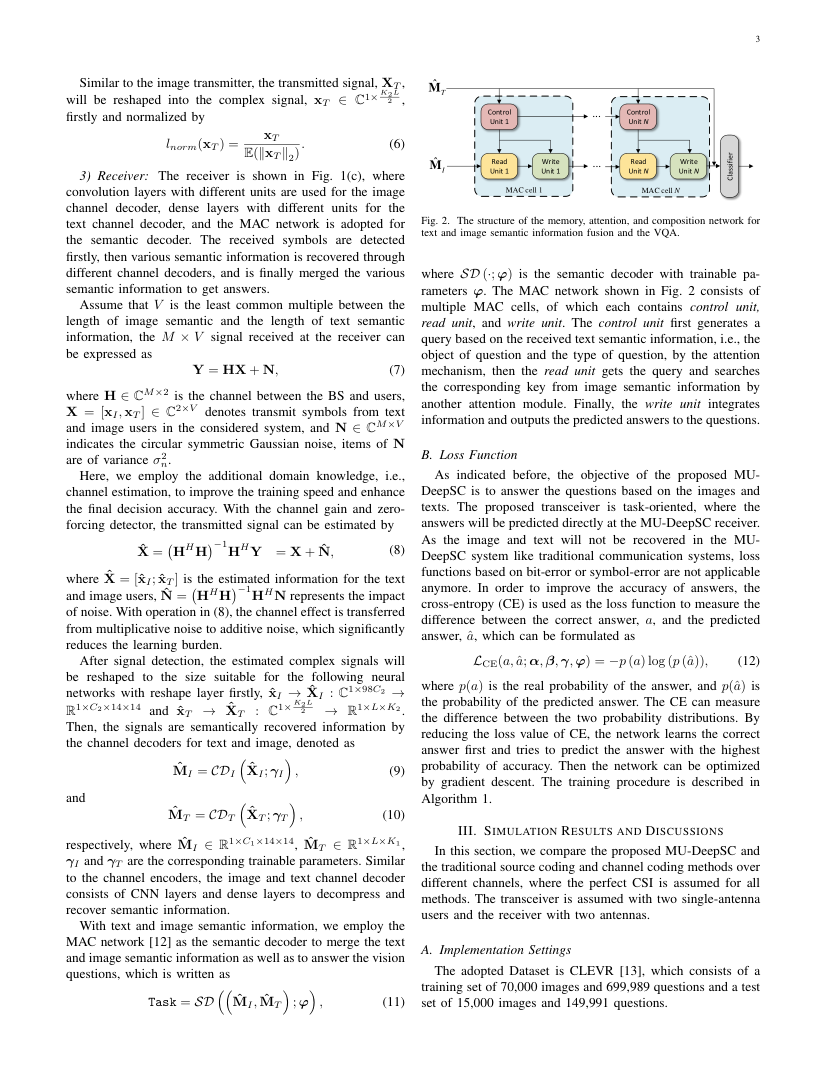
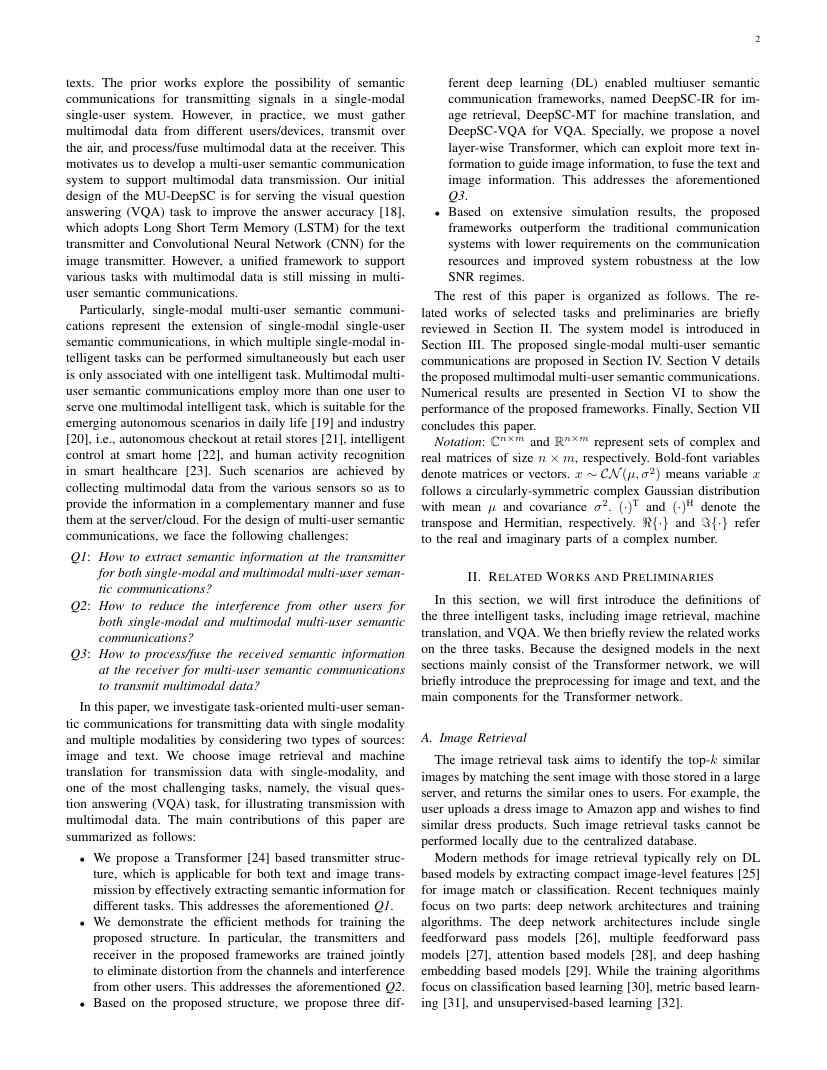
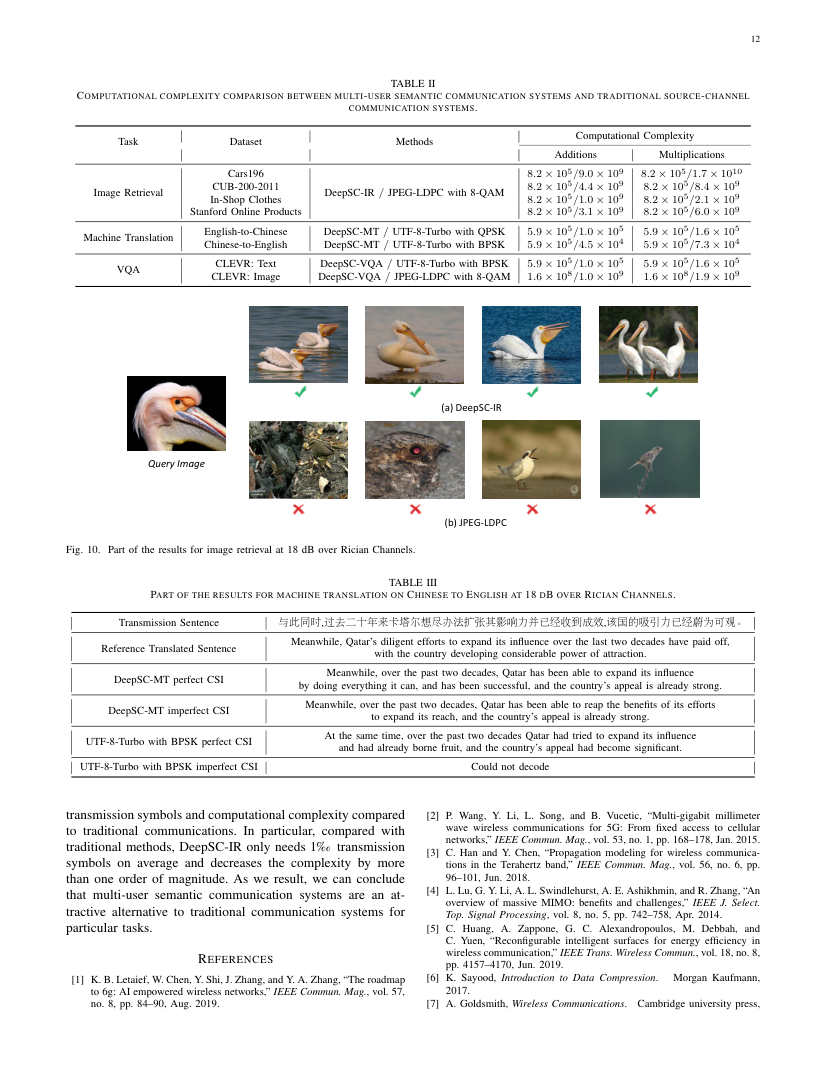
Task-Oriented Multi-User Semantic Communications for VQA,原 PDF 第 2 页(架构/方法页)。Task-Oriented Multi-User Semantic Communications for VQA,原 PDF 第 3 页(关键结果页)。
Task-Oriented Multi-User Semantic Communications
2022 · IEEE Journal on Selected Areas in Communications · 多用户接入、广播或中继
作者:Huiqiang Xie; Zhijin Qin; Xiaoming Tao; Khaled B. Letaief
团队归属:DeepSC 稳定作者链:Huiqiang Xie, Zhijin Qin;机构记录:Queen Mary University of London; Tsinghua University; Hong Kong University of Science and Technology; Peng Cheng Laboratory
现有进展:在本文之前,相关研究已确立语义通信被视为服务未来智能应用的有前景技术。 PDF p.2PDF p.3
仍然存在的问题:很少有研究探讨语义通信网络中的资源分配问题。 PDF p.1PDF p.10
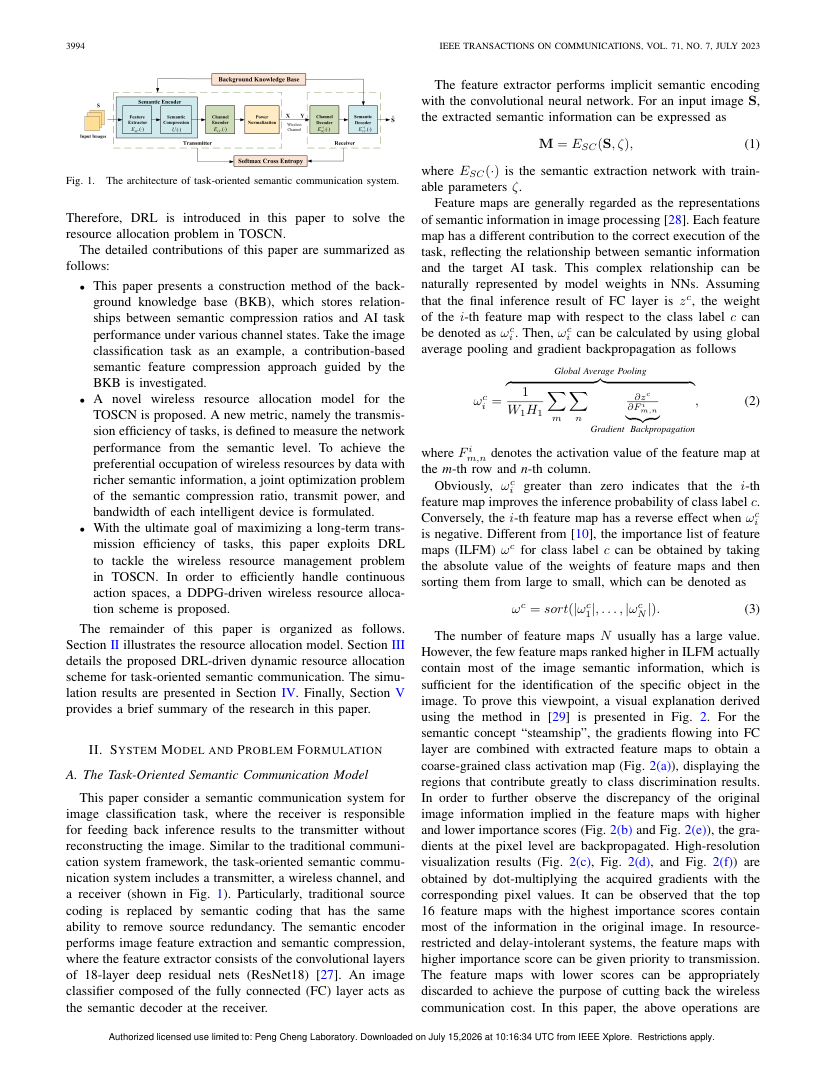
为什么已有方法解决不了:固定或基于比特率的分配无法区分具有不同语义重要性的样本、用户和任务。它可能将功力和带宽浪费在低价值细节上,同时让任务质量对信道最敏感的用户感到饥饿。更具体地说,已有链路缺乏本文随后引入的论文特有机制:随后,通过以图像分类任务为例,提出了一种新的TOSCN无线资源分配模型。 PDF p.1PDF p.10
为什么这个问题值得研究:这个问题很重要,因为边缘设备往往需要及时做出决策,而不是忠实的复制品。仅发送任务足够的信息可以减少无线资源占用和延迟,但前提是关键证据能通过信道保存。 PDF p.2PDF p.3
本文怎样顺着问题提出方案:因此,论文开发了任务导向语义通信的DRL驱动动态资源分配。其具体设计总结如下:论文开发了题目所述的方法:面向任务语义通信的DRL驱动动态资源分配。 PDF p.2PDF p.3
方案为什么有可能起作用:因果联系在于,随后以图像分类任务为例,提出了一种新的TOSCN无线资源分配模型。语义重要性现在改变了分配决策,而非仅在资源确定后才评估。 PDF p.2PDF p.3
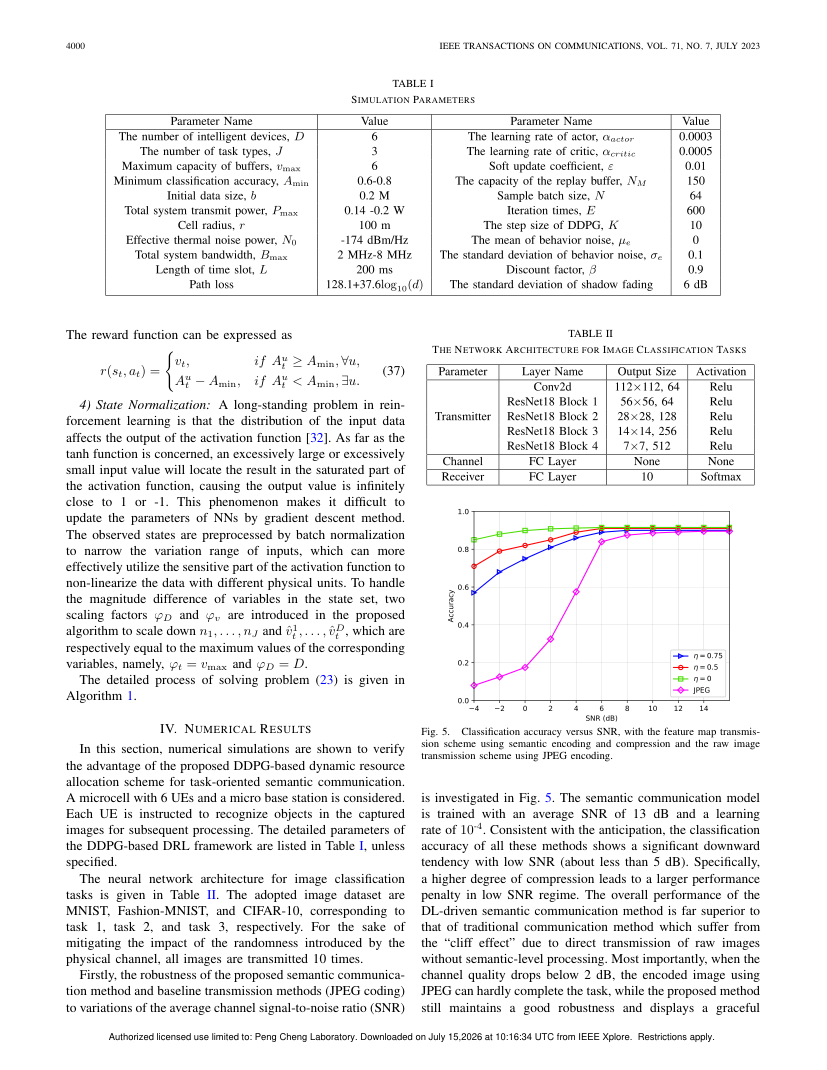
作者希望证明什么:论文测试了这种因果机制是否经得起公平的通信比较。报告的证据是:模拟结果表明,所提方案在缓解通信压力和提升资源有限无线网络任务性能方面取得了显著优势。 PDF p.6PDF p.7PDF p.8
系统怎么工作
该系统是任务导向推理的端到端通信链路。论文发展了题目所描述的方法:任务导向语义通信的DRL驱动动态资源分配。随后,以图像分类任务为例,提出了一种新的TOSCN无线资源分配模型。关键在于学习到的表征如何与所说的信道和资源约束相连接,而不仅仅是使用更大的神经网络。 PDF p.2PDF p.3
输入:源数据是源数据以及一个下游任务。 PDF p.2PDF p.3
发送端:发送方应用论文的语义/信源信道编码器:随后,通过图像分类任务作为示例,提出了一种新的TOSCN无线资源分配模型。 PDF p.2PDF p.3
实际发送:传输对象是由底层系统模型定义的语义速率、任务效用或信道使用变量。 PDF p.2PDF p.3
信道:传输遵循论文中评估的信道/资源模型;其处理方式总结为沿用底层语义通信链路或抽象速率模型。 PDF p.4PDF p.5
接收端:接收端从系统公式假设的接收机模型开始,应用所提出的解码器、推理模型或生成器。 PDF p.2PDF p.3
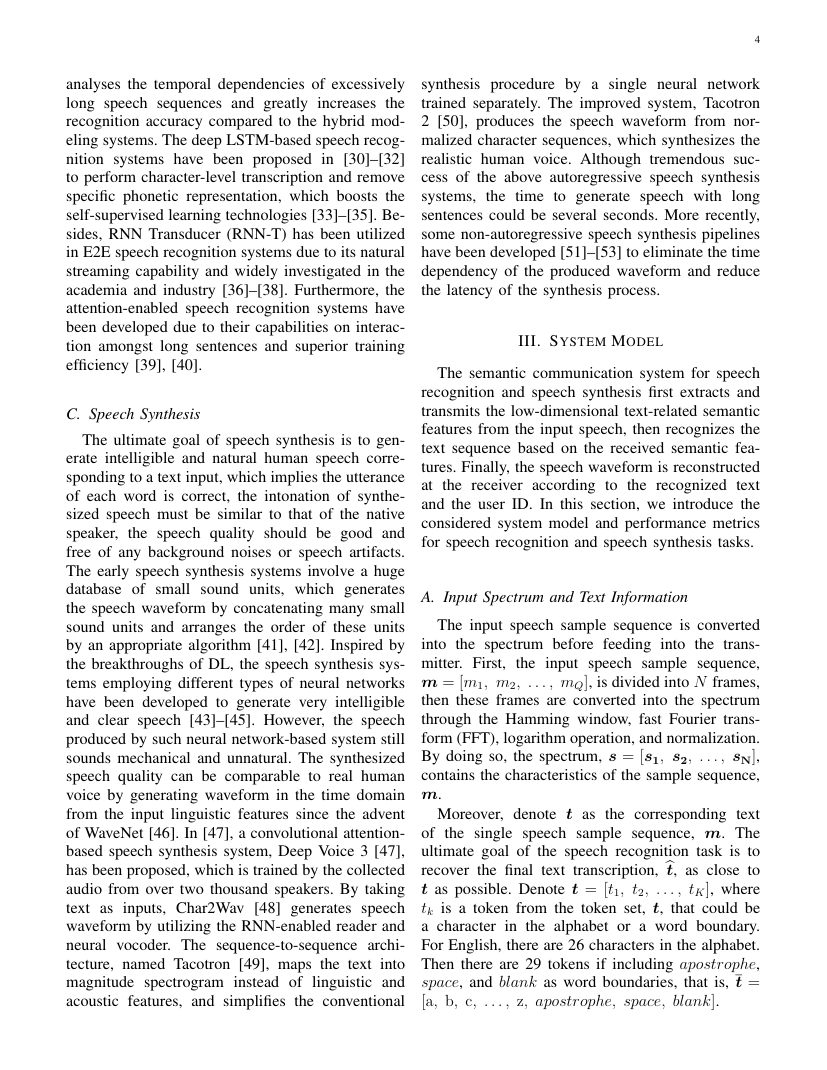
现有进展:在此之前,相关研究方向已确立:我们将语音识别和语音合成分别作为通信系统的传输任务。 PDF p.1PDF p.2
仍然存在的问题:现有的通信设计在论文带宽和噪声信道约束下,并未共同保留语音/音频传输或识别目标所需的语义内容。 PDF p.1PDF p.3PDF p.11
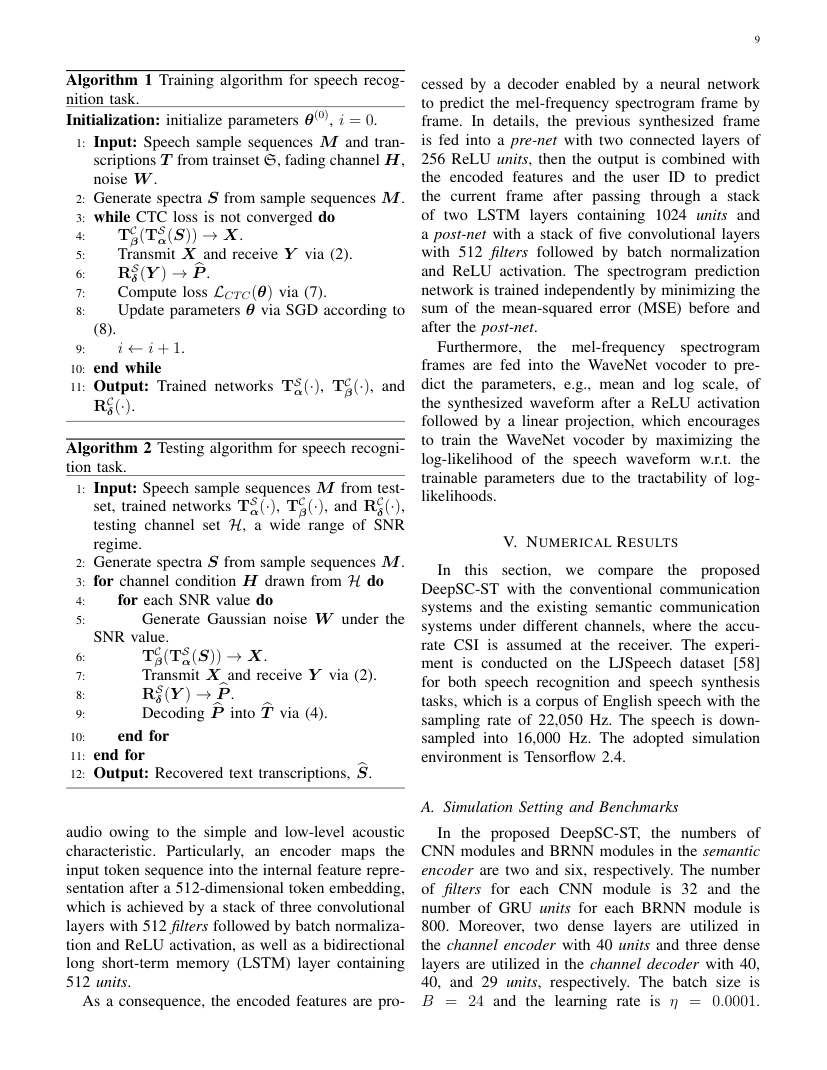
为什么已有方法解决不了:分离的压缩和信道编码,或忽略论文目标语义因子的端到端模型,可以优化不匹配的中间目标。所得表示并未明确针对此处研究的联合带宽、功耗、信道和语义质量约束而塑造。更具体地说,已有链路缺少本文随后引入的论文特有机制:首先,语音识别相关的语义特征被联合语义信道编码器提取用于传输,文本则根据接收到的语义特征在接收端恢复,这大大减少了所需的数据传输量,同时不影响性能。 PDF p.1PDF p.3PDF p.11
为什么这个问题值得研究:这个问题很重要,因为即使波形失真仅有轻微变化,可理解性、识别准确性和丢包隐蔽也可能崩溃;一个有用的系统必须在低比特率和信道误差下保持语言内容。 PDF p.1PDF p.2
本文怎样顺着问题提出方案:因此,本文发展了深度学习赋能的语义通信与语音识别和合成技术。其具体设计总结如下:本文开发了一套基于深度学习的语音传输语义通信系统,名为DeepSC-ST。 PDF p.1PDF p.2
方案为什么有可能起作用:其因果联系在于,首先,语音识别相关的语义特征被联合语义信道编码器提取出来传输,文本则根据接收到的语义特征在接收端恢复,这大大减少了所需的数据传输量,同时不影响性能。语义保真度和信道鲁棒性在同一路径上得到优化,因此瓶颈针对实际噪声链路而形成。 PDF p.1PDF p.2
作者希望证明什么:论文测试了这种因果机制是否经得起公平的通信比较。报告的证据是:根据模拟结果,拟议的DeepSC-ST在低信噪比(SNR)区域内显著优于传统通信系统和现有支持DL的通信系统。 PDF p.9PDF p.11PDF p.13
系统怎么工作
该系统是语音/音频传输或识别的端到端通信链路。本文开发了一套基于深度学习的语音传输语义通信系统,名为DeepSC-ST。首先,语音识别相关的语义特征被联合语义信道编码器提取用于传输,文本则根据接收到的语义特征在接收端恢复,这大大减少了所需的数据传输量,同时不影响性能。关键在于学习到的表征如何与所说的信道和资源约束相连接,而不仅仅是使用更大的神经网络。 PDF p.1PDF p.2
输入:信号来源是语音或音频。 PDF p.1PDF p.2
发送端:发送方应用论文的语义/信源信道编码器:首先,语音识别相关的语义特征被联合语义信道编码器提取出来传输,接收端则根据接收到的语义特征恢复文本,这大大减少了所需的数据传输量,同时不影响性能。 PDF p.1PDF p.2
实际发送:传输对象是功率归一化的实数或复值神经信道符号。 PDF p.1PDF p.2
信道:传输遵循论文中评估的信道/资源模型;其处理方式总结为带噪连续 潜在/复信道符号端到端联合训练。 PDF p.5PDF p.6PDF p.7
接收端:接收端从可微信道或均衡器之后的噪声连续符号开始,应用所提出的解码器、推理模型或生成器。 PDF p.1PDF p.2
Deep Learning Enabled Semantic Communications With Speech Recognition and Synthesis,原 PDF 第 4 页(架构/方法页)。Deep Learning Enabled Semantic Communications With Speech Recognition and Synthesis,原 PDF 第 9 页(关键结果页)。
Semantic Communication With Memory
2023 · IEEE Journal on Selected Areas in Communications · 联合信源信道编码(JSCC)与语义信源编码
作者:Huiqiang Xie; Zhijin Qin; Geoffrey Ye Li
团队归属:DeepSC 稳定作者链:Huiqiang Xie, Zhijin Qin;机构记录:Queen Mary University of London; Tsinghua University; Imperial College London
发射器发送功率归一化的实值或复值神经信道符号。该表示归类为:连续神经 JSCC 信道符号(不属于严格数字语义通信)。这一区别很重要,因为连续的神经符号、硬编码本 index和信道解码的bitstream以不同方式失效。 PDF p.4PDF p.5
通信成本通过论文声明的信道使用、压缩/带宽比、比特率、码率、令牌数量或分配的无线资源来解读。当论文未报告完整的比特级接口时,报告并未仅凭潜在维度发明比特率。 PDF p.4PDF p.5
信道怎样作用,接收端实际拿到什么
信道处理类别:带噪连续 latent/复信道符号端到端联合训练
在拟议的传输路径中,信道的处理方式如下:带噪连续 潜在/复信道符号端到端联合训练。仅作为比较基线提及的LDPC、QAM或其他传统方案不用于分类拟议接收机。 PDF p.1PDF p.2PDF p.3
接收端实际上从可微信道模型或均衡器之后的噪声连续符号开始。然后它重建的内容或任务输出。该陈述明确了学习到的译码器看到的是噪声连续符号、错误的离散变量、软信息,还是已经信道解码的表示。 PDF p.1PDF p.2PDF p.3
实验设置与主要结论
数据集:论文未在结构化字段中明确列出
Baseline:DeepJSCC、Turbo、BERT、DeepSC
指标:accuracy
信道:AWGN、Rayleigh、Rician、fading channel、QAM
实验使用论文中所述的源/任务数据集;与DeepJSCC、Turbo、BERT、DeepSC比较;准确评估;并使用AWGN、Rayleigh、Rician、衰落信道、QAM。一个代表性的报告工作条件是:必须同时读取精确的信噪比、带宽比和功耗约束,并附带相应的结果数据。 PDF p.1PDF p.2PDF p.3
数值结果显示,所提出的Mem-DeepSC在答案准确性和传输效率(即传输符号数量)方面优于基准测试。 PDF p.5PDF p.6PDF p.7
现有进展:在本文发表之前,相关研究已确立语义通信被视为下一代通信系统缓解频谱资源短缺和网络拥堵的有前景解决方案。 PDF p.1
仍然存在的问题:重构导向的发射器会花费带宽处理下游任务不需要的信息,且可能仍无法保护决定任务决策的小功能。 PDF p.1PDF p.2PDF p.5
为什么已有方法解决不了:当接收者只需做出决定时,重建每一个来源细节是个不必要的强硬目标。经过像素或波形真实度训练的编解码器可能会丢弃一个小的任务关键特征,同时保留视觉上合理但无关的内容。更具体地说,早期的流程缺少本文随后引入的论文专用机制:具体来说,我们首先设计了一个基于场景图的语义编码器,它从输入图像中提取可解释的场景图语义,并将语义编码为信息化的图嵌入。 PDF p.1PDF p.2PDF p.5
为什么这个问题值得研究:这个问题很重要,因为边缘设备往往需要及时做出决策,而不是忠实的复制品。仅发送任务足够的信息可以减少无线资源占用和延迟,但前提是关键证据能通过信道保存。 PDF p.1
本文怎样顺着问题提出方案:因此,论文基于结构化场景图开发了面向任务的可解释语义通信。其具体设计总结如下:本研究提出基于场景图的新颖任务导向语义通信框架,名为DeepSC-SG。 PDF p.1
方案为什么有可能起作用:因果联系在于,我们首先设计了一个基于场景图的语义编码器,它从输入图像中提取可解释的场景图语义,并将语义编码为信息化的图嵌入。与任务相关的证据直接控制瓶颈和损失,因此无线电资源在无关源细节上花费不均。 PDF p.1
作者希望证明什么:论文测试了这种因果机制是否经得起公平的通信比较。报告的证据是:模拟结果表明,与传统通信系统相比,DeepSC-SG对信道变化具有相当的鲁棒性,传统通信系统在实现下游智能任务如图像检索方面具有巨大潜力,且传输数据体积显著缩小。 PDF p.3PDF p.4PDF p.5
系统怎么工作
该系统是任务导向推理的端到端通信链路。在本研究中,我们提出了一种基于场景图的新颖任务导向语义通信框架,名为DeepSC-SG。具体来说,我们首先设计了一个基于场景图的语义编码器,它从输入图像中提取可解释的场景图语义,并将语义编码为信息化的图嵌入。关键在于学习到的表征如何与所说的信道和资源约束相连接,而不仅仅是使用更大的神经网络。 PDF p.1
输入:源数据是源数据以及一个下游任务。 PDF p.1
发送端:发送方应用论文的语义/信源信道编码器:具体来说,我们首先设计了基于场景图的语义编码器,它从输入图像中提取可解释的场景图语义,并将语义编码为信息化的图嵌入。 PDF p.1
实际发送:传输对象是功率归一化的实数或复值神经信道符号。 PDF p.1
信道:传输遵循论文中评估的信道/资源模型;其处理方式总结为带噪连续 潜在/复信道符号端到端联合训练。 PDF p.4PDF p.5
接收端:接收端从可微信道或均衡器之后的噪声连续符号开始,应用所提出的解码器、推理模型或生成器。 PDF p.1
发射器发送功率归一化的实值或复值神经信道符号。该表示归类为:连续神经 JSCC 信道符号(不属于严格数字语义通信)。这一区别很重要,因为连续的神经符号、硬编码本 index和信道解码的bitstream以不同方式失效。 PDF p.1PDF p.6
通信成本通过论文声明的信道使用、压缩/带宽比、比特率、码率、令牌数量或分配的无线资源来解读。当论文未报告完整的比特级接口时,报告并未仅凭潜在维度发明比特率。 PDF p.1PDF p.6
信道怎样作用,接收端实际拿到什么
信道处理类别:带噪连续 latent/复信道符号端到端联合训练
在拟议的传输路径中,信道的处理方式如下:带噪连续 潜在/复信道符号端到端联合训练。仅作为比较基线提及的LDPC、QAM或其他传统方案不用于分类拟议接收机。 PDF p.4PDF p.5
接收端实际上从可微信道模型或均衡器之后的噪声连续符号开始。然后它重建的是任务决策,而不一定是原始来源。该陈述明确了学习到的译码器看到的是噪声连续符号、错误的离散变量、软信息,还是已经信道解码的表示。 PDF p.4PDF p.5
实验设置与主要结论
数据集:Flickr30k、VQA
Baseline:JPEG、LDPC、BERT、DeepSC
指标:accuracy
信道:AWGN、Rayleigh、Rician、QAM
实验使用Flickr30k、VQA;与JPEG、LDPC、BERT、DeepSC进行比较;准确评估;并使用AWGN、Rayleigh、Rician、QAM。一个代表性的报告工作条件是:必须同时读取精确的信噪比、带宽比和功耗约束,并附带相应的结果数据。 PDF p.4PDF p.5
模拟结果表明,所提议的DeepSC-SG对信道变化具有相当的鲁棒性,相比传统通信系统,传统通信系统在实现下游智能任务如图像检索方面具有巨大潜力,且传输数据体积显著缩小。 PDF p.3PDF p.4PDF p.5
通信审稿价值与 Codex 判断
价值在于用更少信道使用完成相同任务,并降低端到端时延和设备能耗。
局限:收益与任务和数据集绑定;对未知任务、分布偏移、置信度校准以及稀有关键样本的失败仍需更强证据。
Task-Oriented Explainable Semantic Communications Based on Structured Scene Graphs,原 PDF 第 2 页(架构/方法页)。Task-Oriented Explainable Semantic Communications Based on Structured Scene Graphs,原 PDF 第 4 页(关键结果页)。
A Robust Semantic Communication System for Image Transmission
现有进展:在本文之前,相关研究已证明语义通信作为解决传输瓶颈的有前景方法,尤其是在6G技术持续发展的背景下,已获得广泛关注。 PDF p.1PDF p.2
仍然存在的问题:通过拥抱这一创新优化目标,语义通信能够有效减少传输的数据量,从而成功缓解通信网络中快速数据增长带来的挑战[2]。 PDF p.1PDF p.5
为什么已有方法解决不了:分离的压缩和信道编码,或忽略论文目标语义因子的端到端模型,可以优化不匹配的中间目标。所得表示并未明确针对此处研究的联合带宽、功耗、信道和语义质量约束而塑造。更具体地说,已有链路缺乏本文随后引入的论文特有机制:语义通信作为解决传输瓶颈的有前景方法而备受关注,尤其是在6G技术持续发展的背景下。 PDF p.1PDF p.5
为什么这个问题值得研究:问题之所以重要,是因为有限的信道使用迫使系统选择保护哪些视觉信息。感知或域关键结构可能比平均像素保真度更有价值,尤其是在低信噪比或高压缩率下。 PDF p.1PDF p.2
本文怎样顺着问题提出方案:因此,本文开发了《图像传输的稳健语义通信系统》。其具体设计总结如下:具体来说,我们提出了一种新颖的语义障碍强度指标,并开发语义障碍数据集。 PDF p.1PDF p.2
方案为什么有可能起作用:其因果关系在于,语义通信作为解决传输瓶颈的有前景方法而受到广泛关注,尤其是在6G技术持续发展的背景下。语义保真度和信道鲁棒性在同一路径上得到优化,因此瓶颈针对实际噪声链路而形成。 PDF p.1PDF p.2
作者希望证明什么:论文测试了这种因果机制是否经得起公平的通信比较。报告的证据是:实验结果显示,在不同语义障碍强度下,DeepSC-RI表现更优。 PDF p.4PDF p.5PDF p.6
系统怎么工作
该系统是图像传输或生成的端到端通信链路。具体来说,我们提出了一种新的指标来量化语义障碍的强度,并开发了语义障碍数据集。语义通信作为解决传输瓶颈的有前景方法而备受关注,尤其是在6G技术持续发展的背景下。关键在于学习到的表征如何与所说的信道和资源约束相连接,而不仅仅是使用更大的神经网络。 PDF p.1PDF p.2
输入:源是输入图像。 PDF p.1PDF p.2
发送端:发送方应用论文中的语义/信源信道编码器:语义通信作为解决传输瓶颈的有前景方法,尤其随着6G技术的持续发展,这一方法备受关注。 PDF p.1PDF p.2
实际发送:传输对象是功率归一化的实数或复值神经信道符号。 PDF p.1PDF p.2
信道:传输遵循论文中评估的信道/资源模型;其处理方式总结为带噪连续 潜在/复信道符号端到端联合训练。 PDF p.1PDF p.2PDF p.4
接收端:接收端从可微信道或均衡器之后的噪声连续符号开始,应用所提出的解码器、推理模型或生成器。 PDF p.1PDF p.2
A Robust Semantic Communication System for Image Transmission,原 PDF 第 2 页(架构/方法页)。A Robust Semantic Communication System for Image Transmission,原 PDF 第 4 页(关键结果页)。
A Robust Semantic Text Communication System
2024 · IEEE Transactions on Wireless Communications · 任务导向联合信源信道设计
作者:Xiang Peng; Zhijin Qin; Xiaoming Tao; Jianhua Lü; Lajos Hanzo
团队归属:DeepSC 稳定作者链:Zhijin Qin;机构记录:Tsinghua University; National Engineering Research Center for Information Technology in Agriculture; University of Southampton
现有进展:在此之前,相关研究领域已确立语义通信日益被视为提升传输效率的有前景解决方案。 PDF p.1
仍然存在的问题:语义通信不仅容易受到物理信道障碍的影响,还容易受到语义障碍的影响,这会降低接收端的语义理解并干扰相关的下游任务。 PDF p.1PDF p.9
为什么已有方法解决不了:分离的压缩和信道编码,或忽略论文目标语义因子的端到端模型,可以优化不匹配的中间目标。所得表示并未明确针对此处研究的联合带宽、功耗、信道和语义质量约束而塑造。更具体地说,早期的流程缺乏本文随后引入的论文特有机制:因此,我们将重点放在语义通信对语义障碍的鲁棒性上。 PDF p.1PDF p.9
为什么这个问题值得研究:这个问题很重要,因为边缘设备往往需要及时做出决策,而不是忠实的复制品。仅发送任务足够的信息可以减少无线资源占用和延迟,但前提是关键证据能通过信道保存。 PDF p.1
本文怎样顺着问题提出方案:因此,本文开发了《稳健语义文本通信系统》。其具体设计总结如下:随后,我们提出一个稳健的深度学习支持语义通信系统(R-DeepSC),通过引入一个用于稳健语义编码的语义校正器,以促进语义传输。 PDF p.1
方案为什么有可能起作用:因果联系在于,因此我们关注语义通信对语义障碍的鲁棒性。语义保真度和信道鲁棒性在同一路径上得到优化,因此瓶颈针对实际噪声链路而形成。 PDF p.1PDF p.3PDF p.5
作者希望证明什么:论文测试了这种因果机制是否经得起公平的通信比较。报告的证据是:我们的实验结果表明,所提出的R-DeepSC和NA-RDeepSC架构在消除语义障碍方面具有更优异的鲁棒性,因此凸显了本研究在推动稳健语义通信发展中的重要性。 PDF p.5PDF p.6PDF p.9
系统怎么工作
该系统是任务导向推理的端到端通信链路。随后,我们提出了一个稳健的深度学习赋能语义通信系统(R-DeepSC),通过引入一个用于强健语义编码的语义校正器,以促进语义传递。因此,我们关注语义通信对语义障碍的鲁棒性。关键在于学习到的表征如何与所说的信道和资源约束相连接,而不仅仅是使用更大的神经网络。 PDF p.1PDF p.3PDF p.5
输入:源数据是源数据以及一个下游任务。 PDF p.1PDF p.3PDF p.5
发送端:发送者应用论文的语义/信源信道编码器:因此,我们关注语义通信对语义障碍的稳健性。 PDF p.1PDF p.3PDF p.5
实际发送:传输对象是一个语义特征或潜在表示,其精确的位映射尚未完全指定。 PDF p.1PDF p.3PDF p.5
信道:传输遵循论文中评估的信道/资源模型;其处理方式总结为:信道接口报告不足或由传统链路抽象承担。 PDF p.1PDF p.3PDF p.4
接收端:接收方从被论文接收方假设的恢复语义特征开始,应用所提出的译码器、推理模型或生成器。 PDF p.1PDF p.3PDF p.5
实验中使用了Europarl、LibriSpeech;与LDPC、BERT、DeepSC比较;用BLEU、BERTScore、准确性、语义相似性进行评估;并使用AWGN、Rayleigh、Rician、衰落信道、MIMO、OFDM、QAM。一个代表性的报告工作条件是:必须同时读取精确的信噪比、带宽比和功耗约束,并附带相应的结果数据。 PDF p.1PDF p.3PDF p.4
我们的实验结果表明,所提出的R-DeepSC和NA-RDeepSC架构在消除语义障碍方面具有更优越的鲁棒性,因此凸显了本研究在推动稳健语义通信发展中的重要性。 PDF p.5PDF p.6PDF p.9
团队归属:DeepSC 稳定作者链:Zhijin Qin;机构记录:Zhejiang University; National Engineering Research Center for Information Technology in Agriculture; Tsinghua University
现有进展:在此之前,相关研究领域已证明任务导向语义通信已实现显著的性能提升。 PDF p.1PDF p.2
仍然存在的问题:语义通信中使用的深度神经网络在任务变更时必须更新,或者需要存储多个模型以执行不同任务。 PDF p.1PDF p.3PDF p.12
为什么已有方法解决不了:分离的压缩和信道编码,或忽略论文目标语义因子的端到端模型,可以优化不匹配的中间目标。所得表示并未明确针对此处研究的联合带宽、功耗、信道和语义质量约束而塑造。更具体地说,早期的流程缺少了本文随后引入的论文特有机制:为了减少传输开销,我们设计了一个统一的特征代码本,以服务多个任务,只传输代码本中这些任务特定特征的索引。 PDF p.1PDF p.3PDF p.12
为什么这个问题值得研究:问题之所以重要,是因为有限的信道使用迫使系统选择保护哪些视觉信息。感知或域关键结构可能比平均像素保真度更有价值,尤其是在低信噪比或高压缩率下。 PDF p.1PDF p.2
本文怎样顺着问题提出方案:因此,本文开发了《多模态数据的统一多任务语义通信系统》。其具体设计总结如下:为解决这一问题,我们开发了一个统一的深度学习赋能语义通信系统(U-DeepSC),一个统一的端到端框架能够以多种数据模式服务多种任务。 PDF p.1PDF p.2
方案为什么有可能起作用:其因果联系在于,为了减少传输开销,我们设计了一个统一的特征代码手册,以服务多个任务,只传输代码本中这些任务特定特征的索引。语义保真度和信道鲁棒性在同一路径上得到优化,因此瓶颈针对实际噪声链路而形成。 PDF p.1PDF p.2
作者希望证明什么:论文测试了这种因果机制是否经得起公平的通信比较。报告的证据是:根据模拟结果,拟议的U-DeepSC实现了与针对特定任务设计的面向任务语义通信系统相当的性能,同时显著降低了传输开销和模型规模。 PDF p.6PDF p.7PDF p.8
系统怎么工作
该系统是图像传输或生成的端到端通信链路。为解决这一问题,我们开发了一个统一的深度学习赋能语义通信系统(U-DeepSC),一个统一的端到端框架能够以多种数据模式服务多种任务。为了降低传输开销,我们设计了一个统一的特征代码本,以服务多项任务,仅传输代码本中这些任务特定特征的索引。关键在于学习到的表征如何与所说的信道和资源约束相连接,而不仅仅是使用更大的神经网络。 PDF p.1PDF p.2
输入:源是输入图像。 PDF p.1PDF p.2
发送端:发送方应用论文的语义/信源信道编码器:为减少传输开销,我们设计了一个统一的特征代码手册,以服务多项任务,且仅传输代码本中这些任务特定特征的索引。 PDF p.1PDF p.2
实际发送:传输对象是量化比特、离散令牌或码本 index,而非无约束连续潜在对象。 PDF p.1PDF p.2
信道:传输遵循论文中评估的信道/资源模型;其处理方式总结为离散变量经数字链路传输;需检查残余位/索引错误。 PDF p.3PDF p.4PDF p.7
接收端:接收端从解码后的比特/索引或其噪声/软估计开始,随后进行语义去量化和重建,应用所提出的解码器、推理模型或生成器。 PDF p.1PDF p.2
实验使用CIFAR-10、SST-2;可与DeepJSC、JPEG、LDPC、Turbo、H.264、BERT、DeepSC进行比较;用PSNR、BLEU、准确性、延迟评估;并使用AWGN、Rayleigh、衰落信道、OFDM。一个代表性的报告工作条件是:必须同时读取精确的信噪比、带宽比和功耗约束,并附带相应的结果数据。 PDF p.3PDF p.4PDF p.7
根据模拟结果,拟议的U-DeepSC实现了与为特定任务设计的面向任务语义通信系统相当的性能,同时显著降低了传输开销和模型规模。 PDF p.6PDF p.7PDF p.8
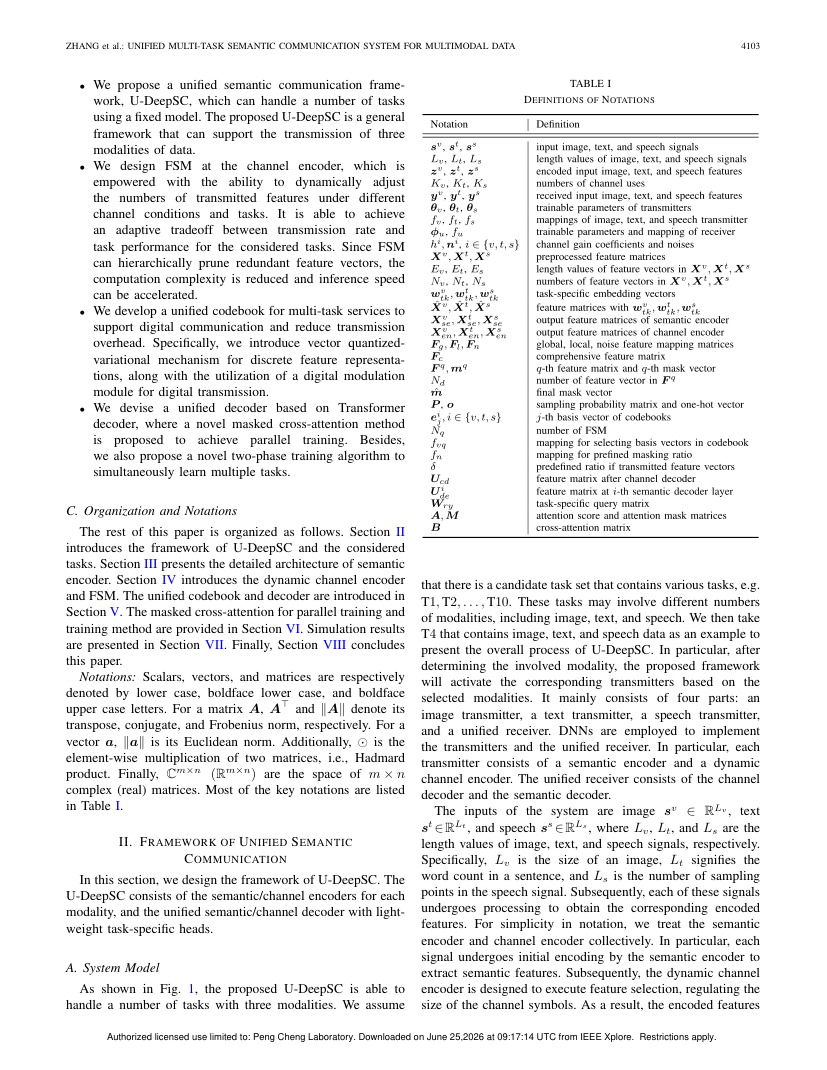
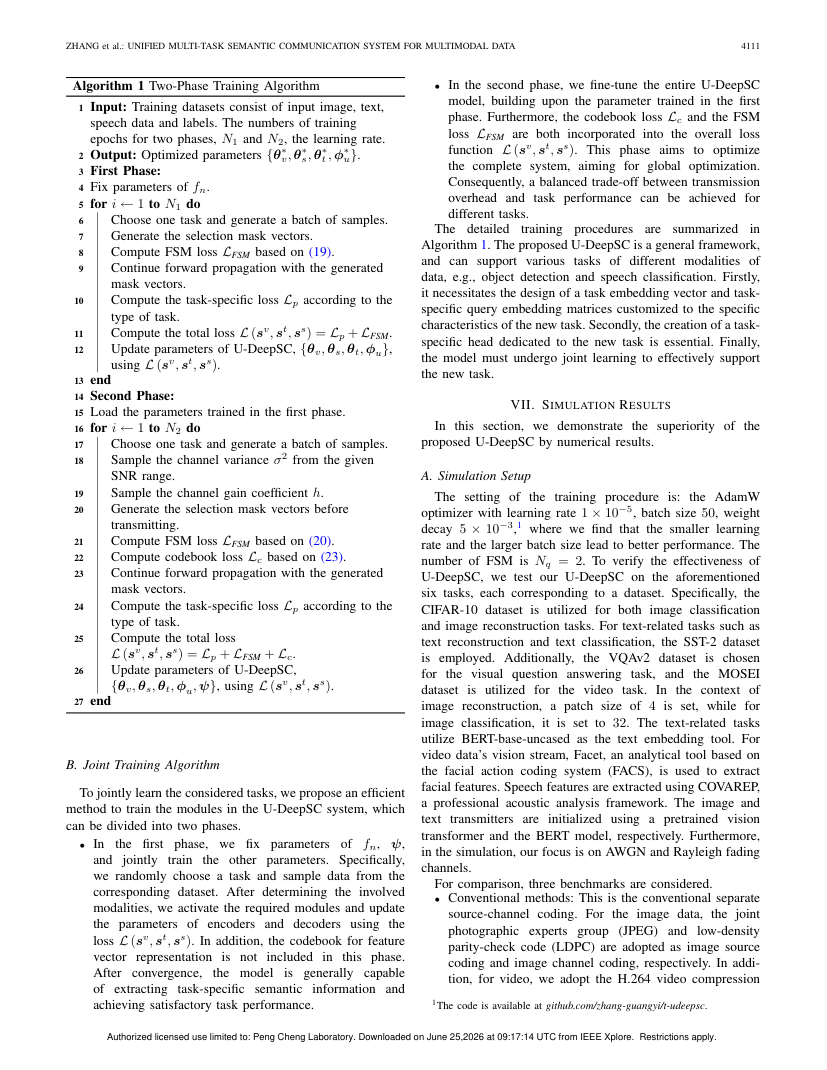
A Unified Multi-Task Semantic Communication System for Multimodal Data,原 PDF 第 3 页(架构/方法页)。A Unified Multi-Task Semantic Communication System for Multimodal Data,原 PDF 第 11 页(关键结果页)。
现有进展:在本文之前,相关研究领域已经确立了:近年来,基于学习的语义通信越来越受到关注,因为它可以优先保留有意义的语义信息,而非传输符号的准确性,从而提高通信效率。 PDF p.1PDF p.2
仍然存在的问题:现有基于学习的方法在定义语义层面丧失方面仍面临局限,且常常难以在保留语义信息与保留复杂细节之间找到良好权衡。 PDF p.1PDF p.3PDF p.9
为什么已有方法解决不了:分离的压缩和信道编码,或忽略论文目标语义因子的端到端模型,可以优化不匹配的中间目标。所得表示并未明确针对此处研究的联合带宽、功耗、信道和语义质量约束而塑造。更具体地说,已有链路缺乏本文随后引入的论文特有机制:此外,我们提出了一种语义重编码(SemRE)操作,利用接收端部署的语义编码器的复制品来指导整个训练过程,当下游模型无法访问时。 PDF p.1PDF p.3PDF p.9
为什么这个问题值得研究:问题之所以重要,是因为有限的信道使用迫使系统选择保护哪些视觉信息。感知或域关键结构可能比平均像素保真度更有价值,尤其是在低信噪比或高压缩率下。 PDF p.1PDF p.2
本文怎样顺着问题提出方案:因此,论文发展了基于对比学习的语义通信。其具体设计总结如下:为解决这些局限性,本文提出了基于对比学习(CL)的语义通信系统。 PDF p.1PDF p.2
方案为什么有可能起作用:其因果联系在于,此外,我们还提出了一种语义重编码(SemRE)操作,利用接收端部署的语义编码器的复制品来指导整个训练过程,当下游模型不可访问时。语义保真度和信道鲁棒性在同一路径上得到优化,因此瓶颈针对实际噪声链路而形成。 PDF p.1PDF p.2PDF p.4
作者希望证明什么:论文测试了这种因果机制是否经得起公平的通信比较。报告的证据是:特别是,我们的方法在带宽压缩比为1/24的CIFAR-10数据集上实现了多达53%的显著准确率提升,并且随着带宽压缩比的提升,图像重建质量也相当于此。 PDF p.6PDF p.7PDF p.8
系统怎么工作
该系统是图像传输或生成的端到端通信链路。为解决这些局限性,本文提出了一种基于对比学习(CL)的语义通信系统。此外,我们提出了一种语义重编码(SemRE)操作,利用接收端部署的语义编码器的复制品来指导整个训练过程,当下游模型不可访问时。关键在于学习到的表征如何与所说的信道和资源约束相连接,而不仅仅是使用更大的神经网络。 PDF p.1PDF p.2PDF p.4
输入:源是输入图像。 PDF p.1PDF p.2PDF p.4
发送端:发送方应用论文的语义/信源信道编码器:此外,我们提出了一种语义重编码(SemRE)操作,利用接收端部署的语义编码器的副本来指导下游模型不可访问时的整个训练过程。 PDF p.1PDF p.2PDF p.4
实际发送:传输对象是功率归一化的实数或复值神经信道符号。 PDF p.1PDF p.2PDF p.4
信道:传输遵循论文中评估的信道/资源模型;其处理方式总结为带噪连续 潜在/复信道符号端到端联合训练。 PDF p.1PDF p.3PDF p.4
接收端:接收端从可微信道或均衡器之后的噪声连续符号开始,应用所提出的解码器、推理模型或生成器。 PDF p.1PDF p.2PDF p.4
发射器发送功率归一化的实值或复值神经信道符号。该表示归类为:连续神经 JSCC 信道符号(不属于严格数字语义通信)。这一区别很重要,因为连续的神经符号、硬编码本 index和信道解码的bitstream以不同方式失效。 PDF p.1PDF p.3PDF p.4
通信成本通过论文声明的信道使用、压缩/带宽比、比特率、码率、令牌数量或分配的无线资源来解读。当论文未报告完整的比特级接口时,报告并未仅凭潜在维度发明比特率。 PDF p.1PDF p.3PDF p.4
信道怎样作用,接收端实际拿到什么
信道处理类别:带噪连续 latent/复信道符号端到端联合训练
在拟议的传输路径中,信道的处理方式如下:带噪连续 潜在/复信道符号端到端联合训练。仅作为比较基线提及的LDPC、QAM或其他传统方案不用于分类拟议接收机。 PDF p.1PDF p.3PDF p.4
接收端实际上从可微信道模型或均衡器之后的噪声连续符号开始。然后它会重建或生成的图像。该陈述明确了学习到的译码器看到的是噪声连续符号、错误的离散变量、软信息,还是已经信道解码的表示。 PDF p.1PDF p.3PDF p.4
实验设置与主要结论
数据集:CIFAR-10、Kodak、VQA
Baseline:DeepJSCC、BPG、LDPC、Polar、H.265、DeepSC
指标:PSNR、accuracy、latency、BER、SER
信道:AWGN、Rayleigh、QAM
实验中使用CIFAR-10、柯达、VQA;可与DeepJSCC、BPG、LDPC、Polar、H.265、DeepSC比较;评估PSNR、准确率、延迟、BER、SER;并使用AWGN、Rayleigh、QAM。一个代表性的报告工作条件是:必须同时读取精确的信噪比、带宽比和功耗约束,并附带相应的结果数据。 PDF p.1PDF p.3PDF p.4
特别是,我们的方法在带宽压缩比为1/24的CIFAR-10数据集上实现了高达53%的显著精度提升,并且随着带宽压缩比的提升,图像重建质量也相当于此。 PDF p.6PDF p.7PDF p.8
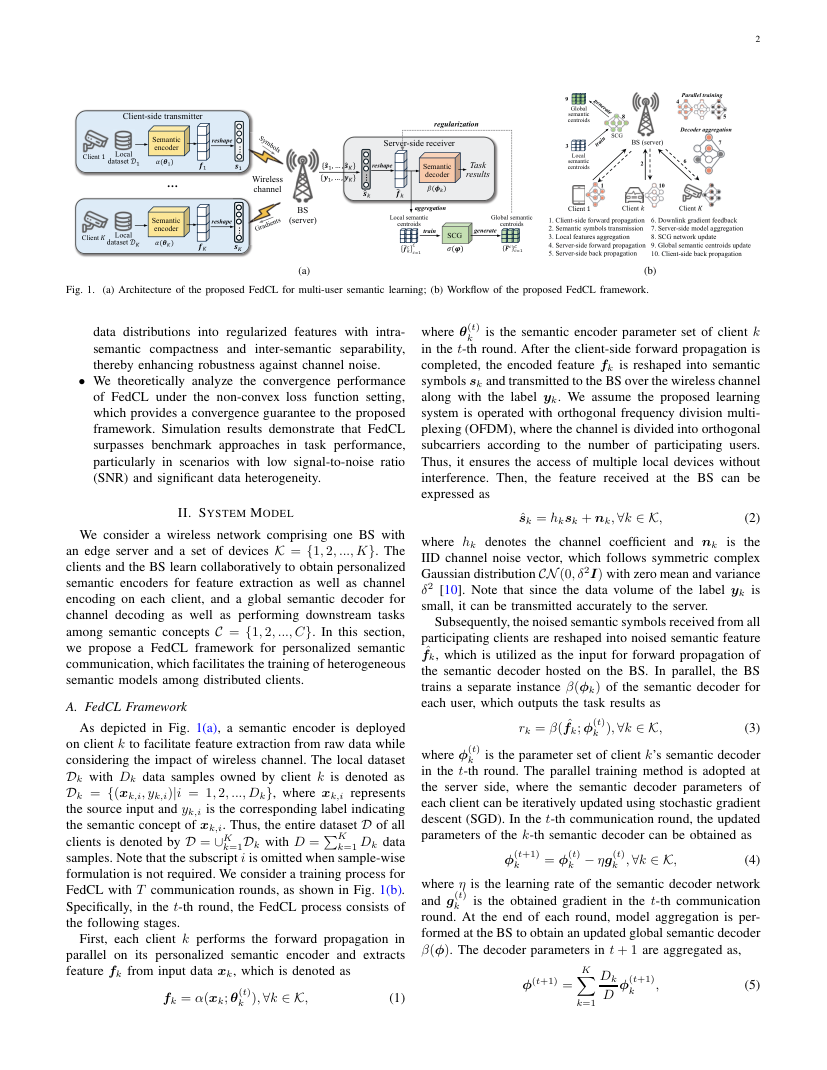
现有进展:在本文之前,相关工作领域已确认 Our FedCL 支持多个客户端的本地语义编码器协作训练,并支持基站拥有的全局语义解码器。 PDF p.1
仍然存在的问题:其中很少涉及基于DNN的语义模型训练方法,而任务导向SemCom的有效性很大程度上依赖于每个收发器部署的语义模型,这需要随着信道环境和数据集的变化持续更新[1]。 PDF p.1PDF p.2PDF p.4
为什么已有方法解决不了:分离的压缩和信道编码,或忽略论文目标语义因子的端到端模型,可以优化不匹配的中间目标。所得表示并未明确针对此处研究的联合带宽、功耗、信道和语义质量约束而塑造。更具体地说,已有链路缺乏本文随后引入的论文特有机制:我们的FedCL支持多个客户端协作训练本地语义编码器,并支持基站拥有的全局语义解码器。 PDF p.1PDF p.2PDF p.4
为什么这个问题值得研究:问题之所以重要,是因为有限的信道使用迫使系统选择保护哪些视觉信息。感知或域关键结构可能比平均像素保真度更有价值,尤其是在低信噪比或高压缩率下。 PDF p.1
本文怎样顺着问题提出方案:因此,本文发展了针对个性化语义通信的联邦对比学习。其具体设计总结如下:在论文中,我们设计了一个联邦对比学习(FedCL)框架,旨在支持个性化语义通信。 PDF p.1
方案为什么有可能起作用:其因果联系在于,Our FedCL支持多个客户端协作训练本地语义编码器,以及基站拥有的全局语义解码器。语义保真度和信道鲁棒性在同一路径上得到优化,因此瓶颈针对实际噪声链路而形成。 PDF p.1PDF p.2
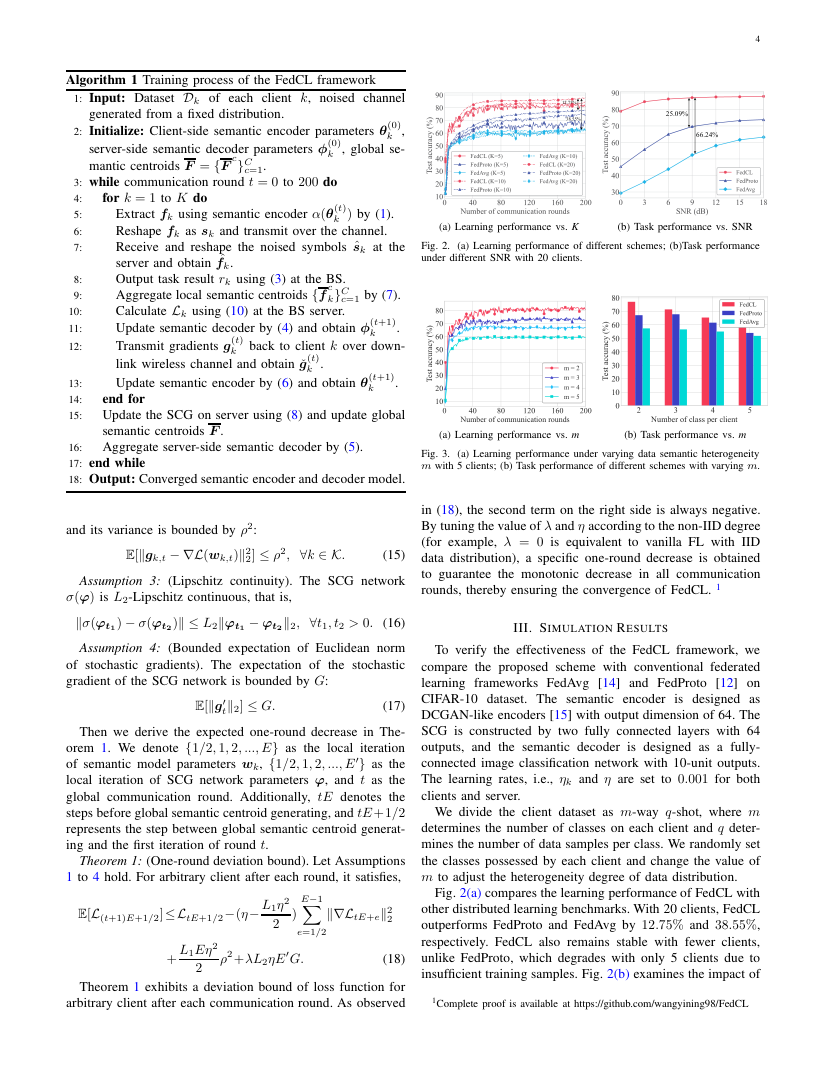
作者希望证明什么:论文测试了这种因果机制是否经得起公平的通信比较。报告的证据是:模拟结果表明,FedCL在任务表现上超越了基准方法,尤其是在低信噪比(SNR)和显著数据异质性的场景中。 PDF p.2PDF p.3PDF p.4
系统怎么工作
该系统是图像传输或生成的端到端通信链路。在论文中,我们设计了一个联邦对比学习(FedCL)框架,旨在支持个性化语义通信。我们的FedCL支持多个客户端协作训练本地语义编码器,并支持基站拥有的全局语义解码器。关键在于学习到的表征如何与所说的信道和资源约束相连接,而不仅仅是使用更大的神经网络。 PDF p.1PDF p.2
输入:源是输入图像。 PDF p.1PDF p.2
发送端:发送方应用论文的语义/信源信道编码器:我们的FedCL支持多个客户端的本地语义编码器协作训练,并支持基站拥有的全局语义解码器。 PDF p.1PDF p.2
实际发送:传输对象是功率归一化的实数或复值神经信道符号。 PDF p.1PDF p.2
信道:传输遵循论文中评估的信道/资源模型;其处理方式总结为带噪连续 潜在/复信道符号端到端联合训练。 PDF p.2PDF p.5
接收端:接收端从可微信道或均衡器之后的噪声连续符号开始,应用所提出的解码器、推理模型或生成器。 PDF p.1PDF p.2
Federated Contrastive Learning for Personalized Semantic Communication,原 PDF 第 2 页(架构/方法页)。Federated Contrastive Learning for Personalized Semantic Communication,原 PDF 第 4 页(关键结果页)。
Hybrid Digital-Analog Semantic Communications
2025 · IEEE Journal on Selected Areas in Communications · 联合信源信道编码(JSCC)与语义信源编码
作者:Huiqiang Xie; Zhijin Qin; Zhu Han; Khaled B. Letaief
团队归属:DeepSC 稳定作者链:Huiqiang Xie, Zhijin Qin;机构记录:Jinan University; Tsinghua University; University of Houston; Hong Kong University of Science and Technology
现有进展:在此之前,相关研究已确立数字和模拟语义通信(SemCom)面临固有局限,如模拟SemCom中的数据安全问题,以及数字SemCom中的平稳和悬崖边效应。 PDF p.1PDF p.2
仍然存在的问题:数字和模拟语义通信(SemCom)面临固有限制,如模拟SemCom的数据安全问题,以及数字SemCom中的平稳和悬崖效应。 PDF p.1PDF p.3PDF p.8
为什么已有方法解决不了:纯模拟分支性能下降,但缺乏本地的比特级安全和协议接口,而纯数字分支虽然提供该接口,但可能出现饱和和解码悬崖。单独改进任一分支,可以保持另一个失败模式。更具体地说,已有链路缺乏本文随后引入的专门论文机制:此外,我们提出了基于扩散的信号检测技术,涉及精心设计的方差表和采样算法以精细化传输信号。 PDF p.1PDF p.3PDF p.8
为什么这个问题值得研究:问题之所以重要,是因为有限的信道使用迫使系统选择保护哪些视觉信息。感知或域关键结构可能比平均像素保真度更有价值,尤其是在低信噪比或高压缩率下。 PDF p.1PDF p.2
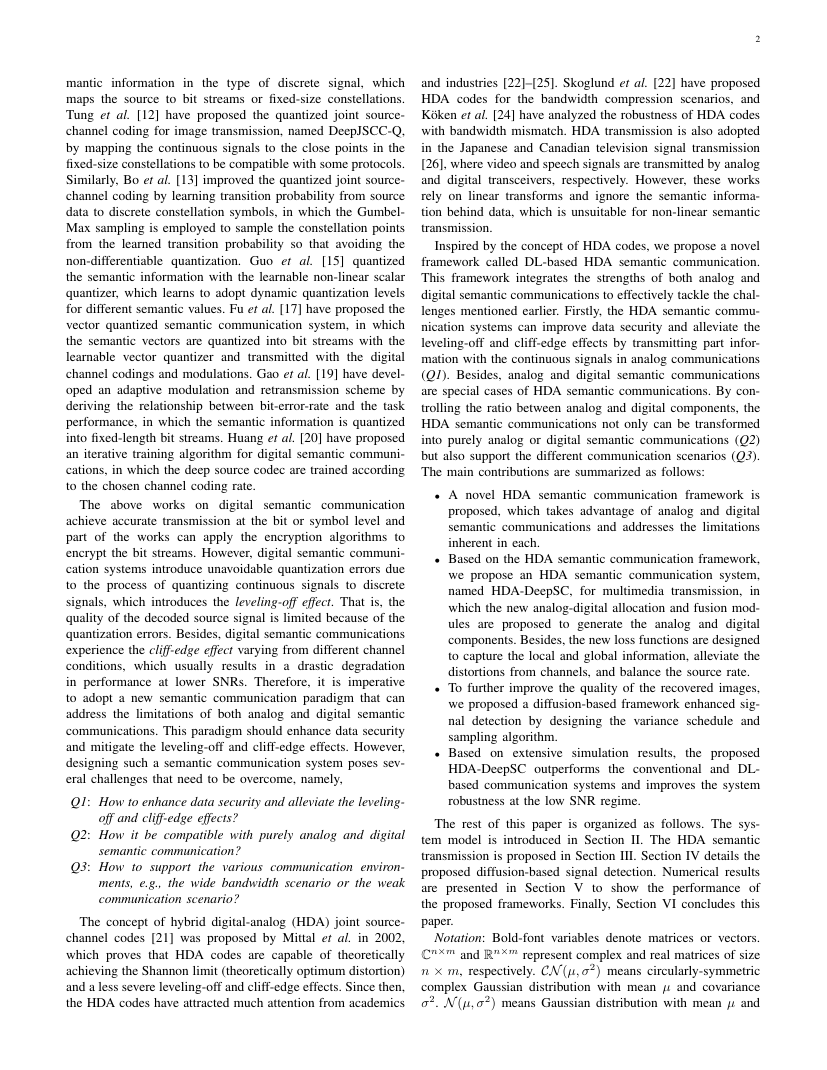
本文怎样顺着问题提出方案:因此,论文发展了混合数字-模拟语义通信。其具体设计总结如下:为克服这些挑战,我们提出了一个新型SemCom框架及相应系统HDA-DeepSC,采用数字-模拟混合方式实现多媒体传输。 PDF p.1PDF p.2
方案为什么有可能起作用:其因果联系在于,此外,我们还提出了基于扩散的信号检测技术,这些技术涉及精心设计的方差表和采样算法,以精细化传输信号。学习的潜在部分被强制通过所描述的离散或混合接口,因此接收端设计时是为它实际将观察到的表征而设计的。 PDF p.1PDF p.2PDF p.4
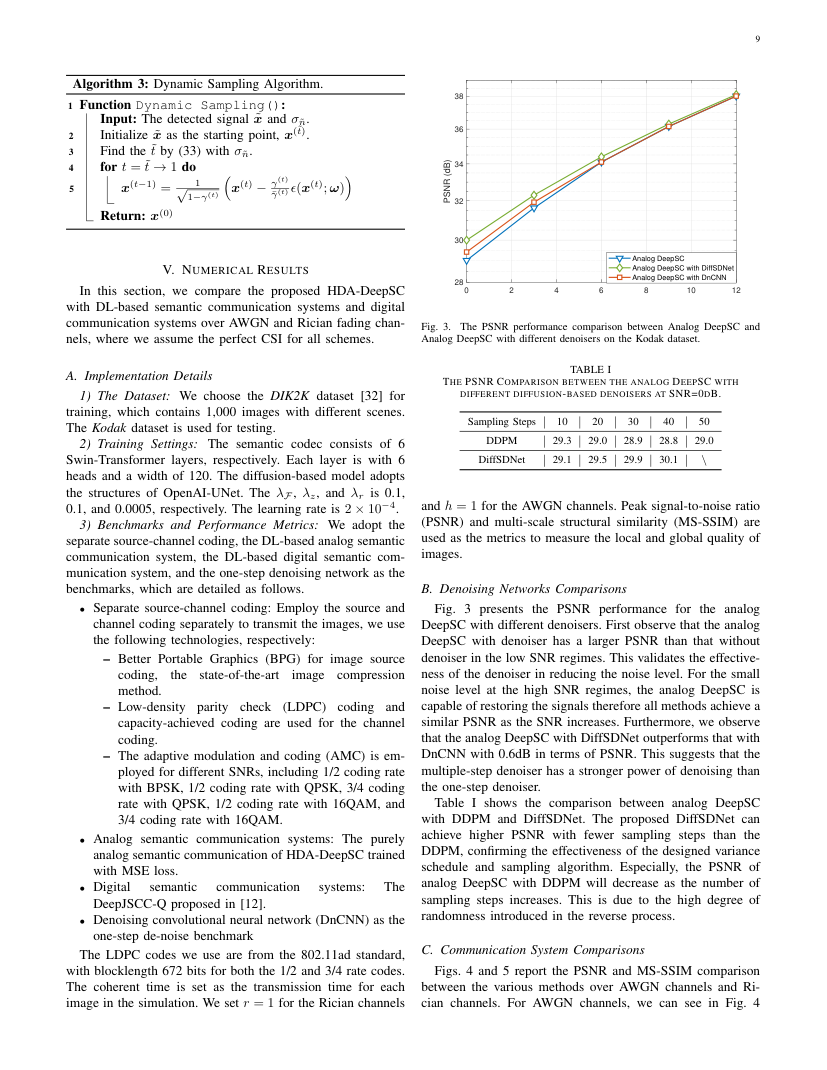
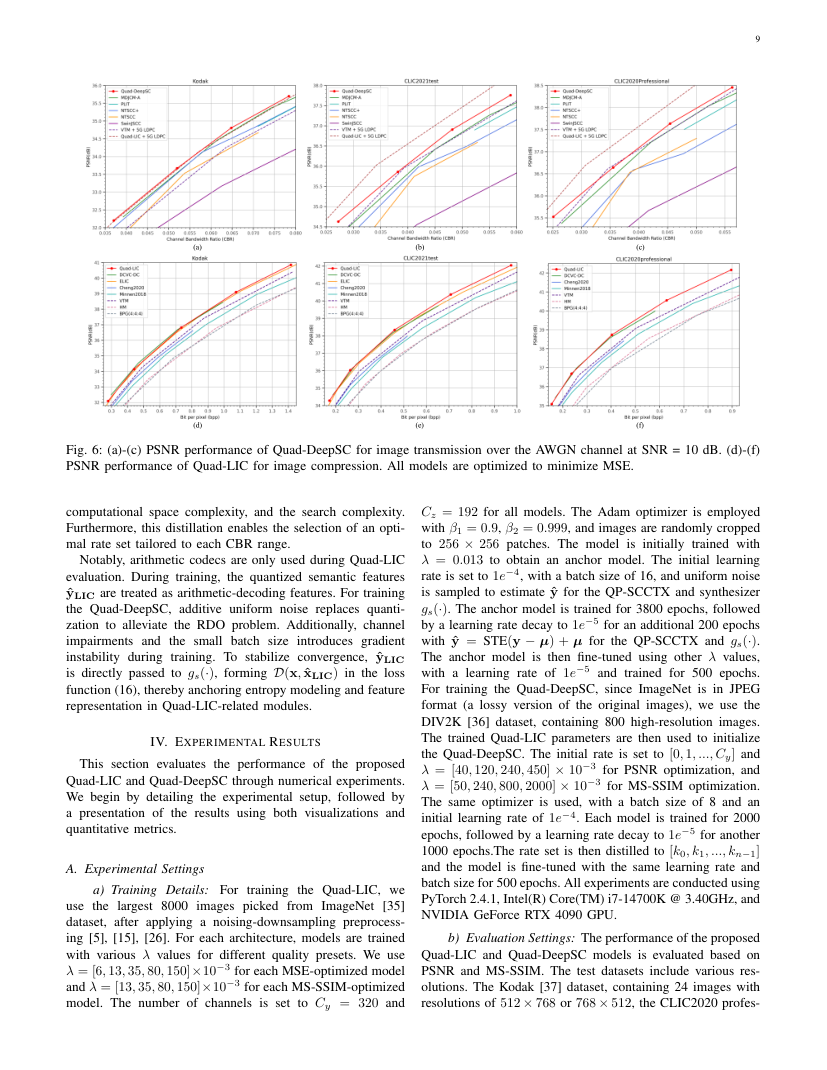
作者希望证明什么:论文测试了这种因果机制是否经得起公平的通信比较。报告的证据是:我们提出的框架在峰值信噪比和多尺度结构相似性方面优于现有基准,展示了其在语义通信质量上的优越性。 PDF p.5PDF p.6PDF p.8
系统怎么工作
该系统是图像传输或生成的端到端通信链路。为克服这些挑战,我们提出了一个新型SemCom框架及相应系统HDA-DeepSC,采用数字-模拟混合方式实现多媒体传输。此外,我们还提出了基于扩散的信号检测技术,涉及精心设计的方差计划和采样算法,以优化传输信号。关键在于学习到的表征如何与所说的信道和资源约束相连接,而不仅仅是使用更大的神经网络。 PDF p.1PDF p.2PDF p.4
输入:源是输入图像。 PDF p.1PDF p.2PDF p.4
发送端:发送方应用论文的语义/信源信道编码器:此外,我们提出基于扩散的信号检测技术,涉及精心设计的方差计划和采样算法以优化传输信号。 PDF p.1PDF p.2PDF p.4
实际发送:传输对象是携带量化/熵编码比特的数字分支和携带连续语义特征的模拟分支。 PDF p.1PDF p.2PDF p.4
信道:传输遵循论文中评估的信道/资源模型;其处理方式总结为量化 bitstream 与连续模拟语义特征并行传输并在接收端融合。 PDF p.3
接收端:接收机从解调/信道解码的数字比特以及噪声的模拟语义特征开始,应用所提出的译码器、推理模型或生成器。 PDF p.1PDF p.2PDF p.4
实验使用柯达;可与DeepJSCC、BPG、JPEG、LDPC、DeepSC进行比较;评估包括PSNR、SSIM、MS-SSIM、BLEU、延迟;并使用AWGN、Rayleigh、Rician、衰落信道、MIMO、OFDM、QAM。一个代表性的报告工作条件是:必须同时读取精确的信噪比、带宽比和功耗约束,并附带相应的结果数据。 PDF p.3
我们提出的框架在峰值信噪比和多尺度结构相似性方面优于现有基准,展示了其在语义通信质量上的优势。 PDF p.5PDF p.6PDF p.8
现有进展:在本文之前,相关研究已确立基于深度学习的语义通信(DeepSC)系统已成为高效无线传输的有前景范式。 PDF p.1PDF p.2
仍然存在的问题:现有的通信设计在论文带宽和噪声信道约束下,无法共同保留图像传输或生成目标所需的语义内容。 PDF p.1PDF p.3PDF p.10
为什么已有方法解决不了:分离的压缩和信道编码,或忽略论文目标语义因子的端到端模型,可以优化不匹配的中间目标。所得表示并未明确针对此处研究的联合带宽、功耗、信道和语义质量约束而塑造。更具体地说,已有链路缺乏本文随后引入的专用机制:在训练过程中,除特征编码模块外,所有组件都被联合优化为紧凑型学习图像编解码器Quad-LIC,用于源压缩任务。 PDF p.1PDF p.3PDF p.10
为什么这个问题值得研究:问题之所以重要,是因为有限的信道使用迫使系统选择保护哪些视觉信息。感知或域关键结构可能比平均像素保真度更有价值,尤其是在低信噪比或高压缩率下。 PDF p.1PDF p.2
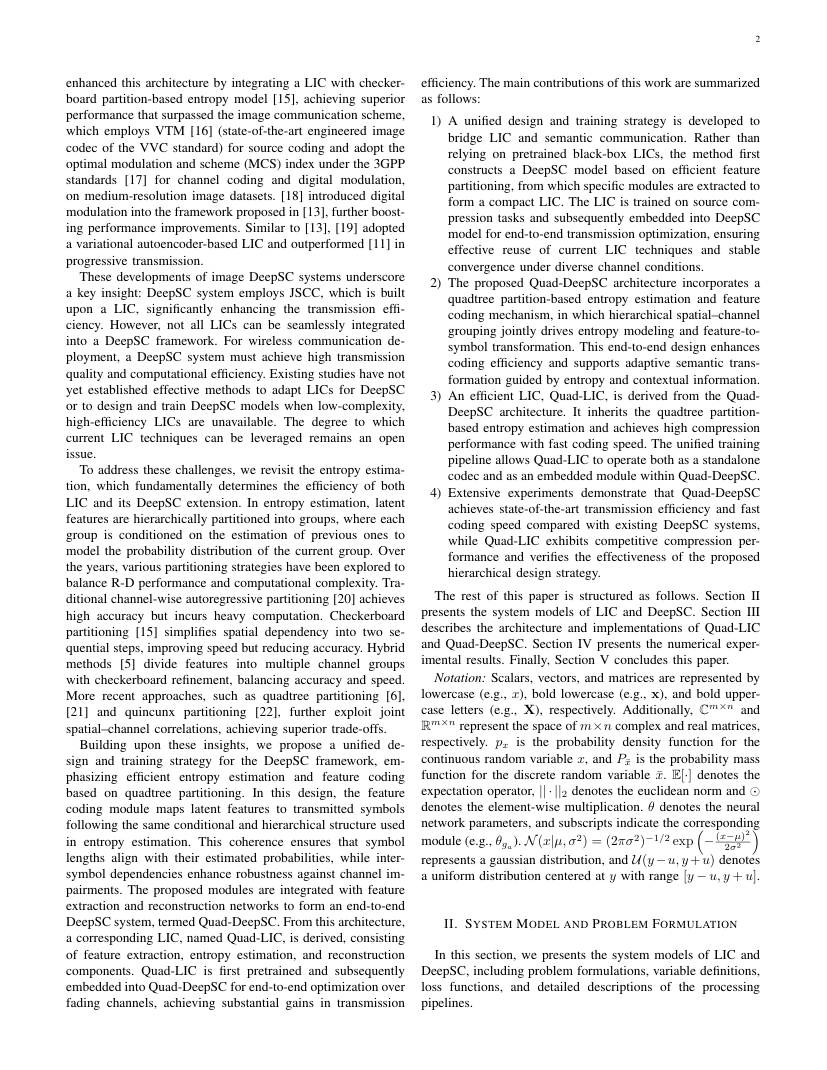
本文怎样顺着问题提出方案:因此,论文发展了基于四叉树划分编码的图像语义通信。其具体设计总结如下:为解决这些限制,我们提出了一种新颖的图像DeepSC系统,采用基于四叉树划分的联合语义信道编码,名为Quad-DeepSC,该系统在实现最先进的传输性能的同时保持低复杂度。 PDF p.1PDF p.2
方案为什么有可能起作用:其因果联系在于,在训练过程中,除特征编码模块外,所有组件都被联合优化为紧凑型学习图像编解码器Quad-LIC,用于源压缩任务。语义保真度和信道鲁棒性在同一路径上得到优化,因此瓶颈针对实际噪声链路而形成。 PDF p.1PDF p.2PDF p.3
该系统是图像传输或生成的端到端通信链路。为解决这些局限,我们提出了一种采用基于四叉树划分的联合语义信道编码的新型图像DeepSC系统,名为Quad-DeepSC,该系统在实现尖端传输性能的同时保持低复杂度。在训练过程中,除特征编码模块外,所有组件都被联合优化为紧凑型学习图像编解码器Quad-LIC,用于源压缩任务。关键在于学习到的表征如何与所说的信道和资源约束相连接,而不仅仅是使用更大的神经网络。 PDF p.1PDF p.2PDF p.3
输入:源是输入图像。 PDF p.1PDF p.2PDF p.3
发送端:发送方应用论文的语义/信源信道编码器:在训练过程中,除特征编码模块外,所有组件都被联合优化为紧凑型学习图像编解码器Quad-LIC,用于源压缩任务。 PDF p.1PDF p.2PDF p.3
实际发送:传输对象是功率归一化的实数或复值神经信道符号。 PDF p.1PDF p.2PDF p.3
信道:传输遵循论文中评估的信道/资源模型;其处理方式总结为带噪连续 潜在/复信道符号端到端联合训练。 PDF p.4
接收端:接收端从可微信道或均衡器之后的噪声连续符号开始,应用所提出的解码器、推理模型或生成器。 PDF p.1PDF p.2PDF p.3
发射器发送功率归一化的实值或复值神经信道符号。该表示归类为:连续神经 JSCC 信道符号(不属于严格数字语义通信)。这一区别很重要,因为连续的神经符号、硬编码本 index和信道解码的bitstream以不同方式失效。 PDF p.1PDF p.2PDF p.3
通信成本通过论文声明的信道使用、压缩/带宽比、比特率、码率、令牌数量或分配的无线资源来解读。当论文未报告完整的比特级接口时,报告并未仅凭潜在维度发明比特率。 PDF p.1PDF p.2PDF p.3
信道怎样作用,接收端实际拿到什么
信道处理类别:带噪连续 latent/复信道符号端到端联合训练
在拟议的传输路径中,信道的处理方式如下:带噪连续 潜在/复信道符号端到端联合训练。仅作为比较基线提及的LDPC、QAM或其他传统方案不用于分类拟议接收机。 PDF p.4
接收端实际上从可微信道模型或均衡器之后的噪声连续符号开始。然后它会重建或生成的图像。该陈述明确了学习到的译码器看到的是噪声连续符号、错误的离散变量、软信息,还是已经信道解码的表示。 PDF p.4
实验设置与主要结论
数据集:ImageNet、Kodak、DIV2K
Baseline:BPG、JPEG、LDPC、VTM、DeepSC、SwinJSCC、NTSCC
指标:PSNR、SSIM、MS-SSIM、accuracy、latency
信道:AWGN、Rayleigh、Rician、fading channel、MIMO
实验使用ImageNet、柯达、DIV2K;与BPG、JPEG、LDPC、VTM、DeepSC、SwinJSCC、NTSCC;用PSNR、SSIM、MS-SSIM、精度、延迟进行评估;并使用AWGN、Rayleigh、Rician、衰落信道、MIMO。一个代表性的报告工作条件是:必须同时读取精确的信噪比、带宽比和功耗约束,并附带相应的结果数据。 PDF p.4
Image Semantic Communication With Quadtree Partition-Based Coding,原 PDF 第 2 页(架构/方法页)。Image Semantic Communication With Quadtree Partition-Based Coding,原 PDF 第 9 页(关键结果页)。
Lightweight Digital Semantic Communication Based on DeepReceiver
2025 · IEEE Transactions on Vehicular Technology · 数字语义编码与学习接收机
作者:Yunqi Feng; Jianping Yu; Weidang Lu; Nan Zhao; Arumugam Nallanathan
现有进展:在本文之前,相关研究领域已证明语义通信(SemCom)因其在不影响通信效率的前提下减少数据传输量而备受关注。 PDF p.1
仍然存在的问题:许多已学习的语义链止于连续的潜在状态,导致量化、有限符号映射以及位/索引错误的后果超出学习设计范围。 PDF p.1PDF p.4
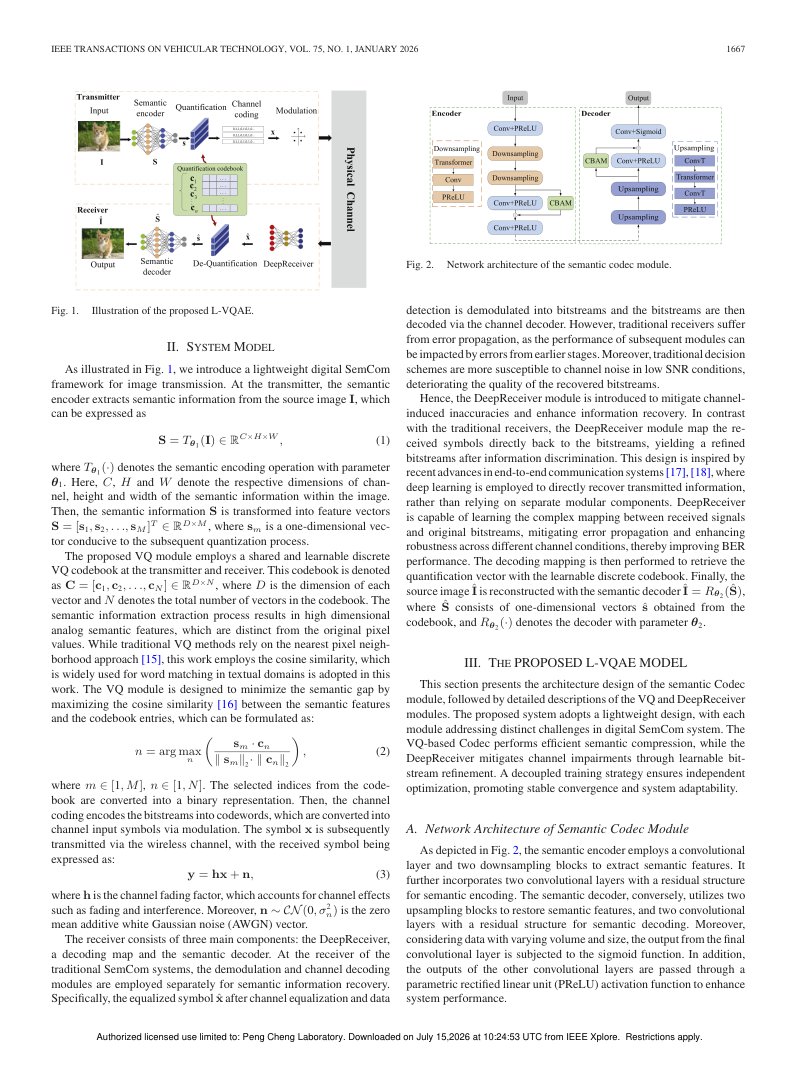
为什么已有方法解决不了:连续潜在链路或单独设计的常规链路并未规定语义信息如何量化、映射为有限符号,以及在位或索引错误时如何保护。仅仅通过改进源自编码器,无法弥合这一接口空白。更具体地说,已有链路缺少本文随后引入的论文特有机制:在本通信中,我们提出了一种新颖的数字SemCom,采用轻量级语义矢量化自动编码/解码器(L-VQAE),以与数字通信协议保持一致。 PDF p.1PDF p.4
为什么这个问题值得研究:问题之所以重要,是因为有限的信道使用迫使系统选择保护哪些视觉信息。感知或域关键结构可能比平均像素保真度更有价值,尤其是在低信噪比或高压缩率下。 PDF p.1
本文怎样顺着问题提出方案:因此,本文开发了基于DeepReceiver的轻量级数字语义通信。其具体设计总结如下:在本通信中,我们提出了一种新型数字SemCom,具备轻量级语义向量化自动编码/解码器(L-VQAE),以与数字通信协议保持一致。 PDF p.1
方案为什么有可能起作用:因果联系在于,在本通信中,我们提出了一种新型数字SemCom,采用轻量级语义矢量化自动编码/解码器(L-VQAE),以与数字通信协议保持一致。学习的潜在部分被强制通过所描述的离散或混合接口,因此接收端设计时是为它实际将观察到的表征而设计的。 PDF p.1
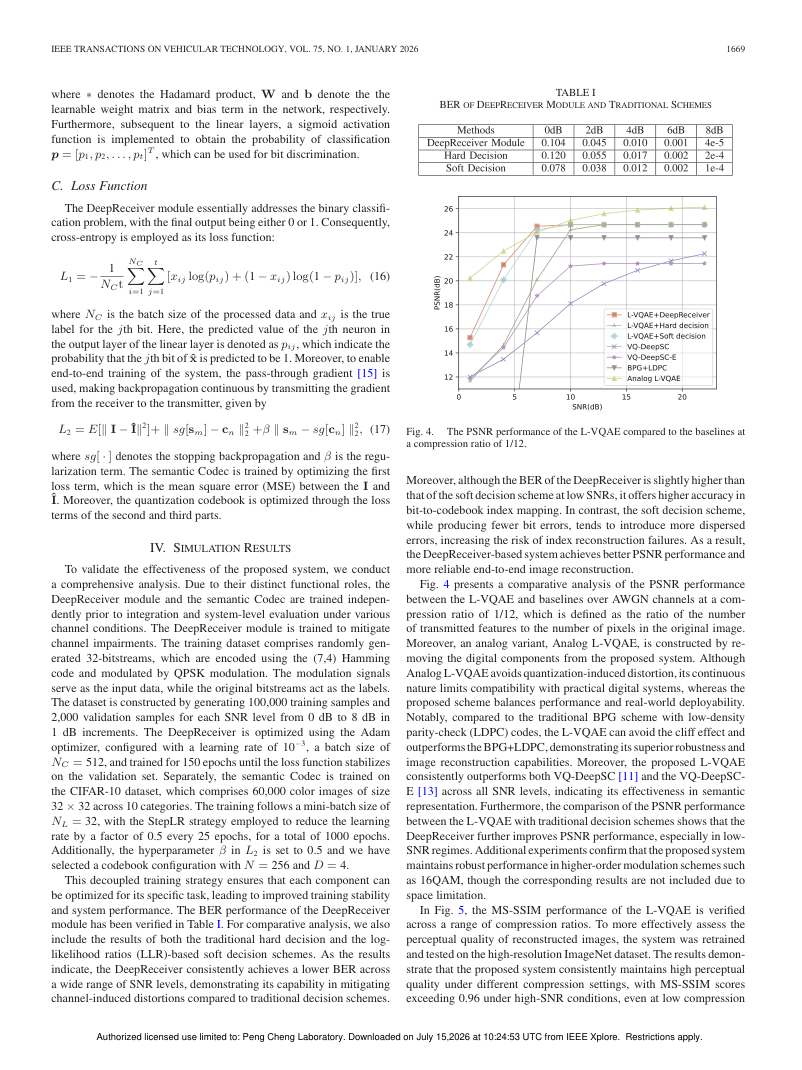
作者希望证明什么:论文测试了这种因果机制是否经得起公平的通信比较。报告的证据是:模拟结果显示,与基线相比,所提系统的峰值信噪比(PSNR)性能显著提升。 PDF p.3PDF p.4
系统怎么工作
该系统是图像传输或生成的端到端通信链路。在本通信中,我们提出了一种新型数字SemCom,具备轻量级语义矢量化自动编码/解码器(L-VQAE),以与数字通信协议保持一致。关键在于学习到的表征如何与所说的信道和资源约束相连接,而不仅仅是使用更大的神经网络。 PDF p.1
输入:源是输入图像。 PDF p.1
发送端:发送方应用论文的语义/信源信道编码器:在本通信中,我们提出了一种新型数字SemCom,具备轻量级语义矢量化自动编码/解码器(L-VQAE),以与数字通信协议保持一致。 PDF p.1
实际发送:传输对象是量化比特、离散令牌或码本 index,而非无约束连续潜在对象。 PDF p.1
信道:传输遵循论文中评估的信道/资源模型;其处理方式总结为离散变量经数字链路传输;需检查残余位/索引错误。 PDF p.1PDF p.2
接收端:接收端从解码后的比特/索引或其噪声/软估计开始,随后进行语义去量化和重建,应用所提出的解码器、推理模型或生成器。 PDF p.1
发送端发送量化比特、离散令牌或码本 index,而非无约束的连续潜在信号。这被归类为:显式数字语义表示:bit、离散 token 或码本 index。这一区别很重要,因为连续的神经符号、硬编码本 index和信道解码的bitstream以不同方式失效。 PDF p.1PDF p.4PDF p.5
通信成本通过论文声明的信道使用、压缩/带宽比、比特率、码率、令牌数量或分配的无线资源来解读。当论文未报告完整的比特级接口时,报告并未仅凭潜在维度发明比特率。 PDF p.1PDF p.4PDF p.5
信道怎样作用,接收端实际拿到什么
信道处理类别:离散变量经数字链路传输;需检查残余 bit/index error
在拟议的传输路径中,信道处理方式如下:离散变量经数字链路传输;需检查残余位/索引误差。仅作为比较基线提及的LDPC、QAM或其他传统方案不用于分类拟议接收机。 PDF p.1PDF p.2
接收端实际上是从解码后的比特/索引或其噪声/软估计开始,随后进行语义量化和重建。然后它会重建或生成的图像。该陈述明确了学习到的译码器看到的是噪声连续符号、错误的离散变量、软信息,还是已经信道解码的表示。 PDF p.1PDF p.2
实验设置与主要结论
数据集:CIFAR-10、ImageNet、Kodak
Baseline:DeepJSCC、BPG、LDPC、DeepSC
指标:PSNR、SSIM、MS-SSIM、accuracy、latency、BER
信道:AWGN、MIMO、OFDM
实验使用CIFAR-10、ImageNet、柯达;与DeepJSC、BPG、LDPC和DeepSC比较;用PSNR、SSIM、MS-SSIM、精度、延迟、BER来评估;并使用AWGN、MIMO、OFDM。一个代表性的报告工作条件是:必须同时读取精确的信噪比、带宽比和功耗约束,并附带相应的结果数据。 PDF p.1PDF p.2
模拟结果显示,与基线相比,所提系统的峰值信噪比(PSNR)性能显著提升。 PDF p.3PDF p.4
Lightweight Digital Semantic Communication Based on DeepReceiver,原 PDF 第 2 页(架构/方法页)。Lightweight Digital Semantic Communication Based on DeepReceiver,原 PDF 第 4 页(关键结果页)。
Multitask Semantic Communication: A Mutual Information-Aided Semi-Supervised Approach
2025 · IEEE Internet of Things Journal · 联合信源信道编码(JSCC)与语义信源编码
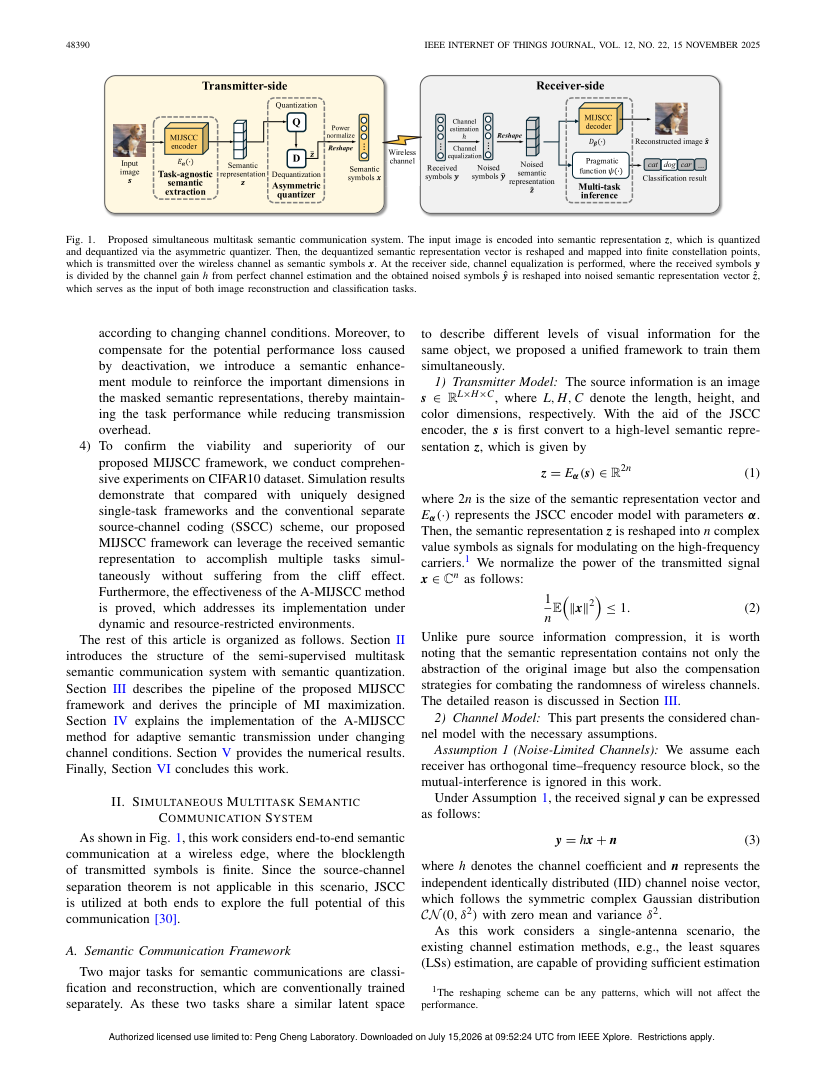
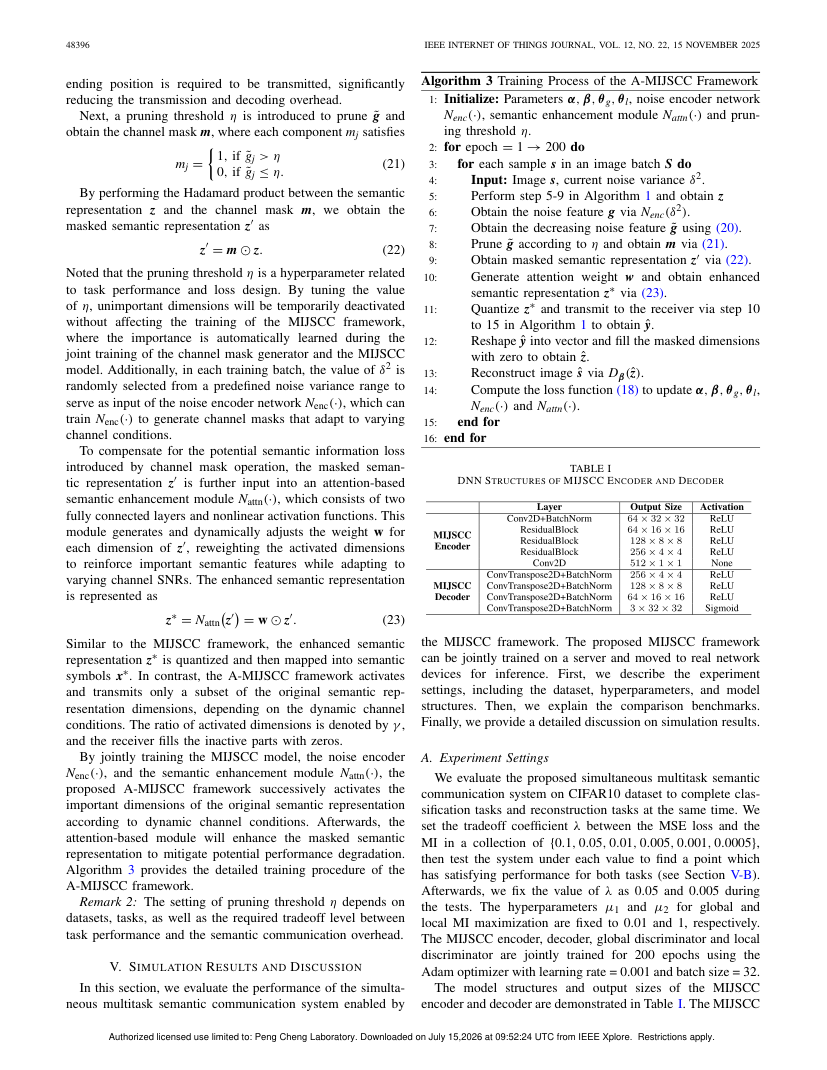
现有进展:在本文之前,相关工作领域已确立了:本文设计了一个端到端数字语义通信系统,以传输语义符号,同时促进图像分类任务和重建任务。 PDF p.1PDF p.2PDF p.3
仍然存在的问题:初步语义通信系统根据单一目标独立设计,包括重建[5]、[6]、[7]和任务执行[8]、[9]、[10]、[11]、[12],这些都无法支持基于同一接收内容同时进行多个任务的物联网场景。 PDF p.1PDF p.6PDF p.10
为什么已有方法解决不了:分离的压缩和信道编码,或忽略论文目标语义因子的端到端模型,可以优化不匹配的中间目标。所得表示并未明确针对此处研究的联合带宽、功耗、信道和语义质量约束而塑造。更具体地说,已有链路缺少了本文随后引入的论文特有机制:然后,高分辨率语义表示被量化为有限星座符号,以满足实际射频系统中离散控制的硬件限制。 PDF p.1PDF p.6PDF p.10
为什么这个问题值得研究:问题之所以重要,是因为有限的信道使用迫使系统选择保护哪些视觉信息。感知或域关键结构可能比平均像素保真度更有价值,尤其是在低信噪比或高压缩率下。 PDF p.1PDF p.2PDF p.3
本文怎样顺着问题提出方案:因此,本文发展了《多任务语义通信:一种互信息辅助半监督方法》。其具体设计总结如下:本文设计了一个端到端数字语义通信系统,用于传输语义符号,同时促进图像分类任务和重建任务。 PDF p.1PDF p.2PDF p.3
方案为什么有可能起作用:因果联系在于,高分辨率语义表示被量子化为有限星座符号,以满足实际射频系统中离散控制的硬件约束。语义保真度和信道鲁棒性在同一路径上得到优化,因此瓶颈针对实际噪声链路而形成。 PDF p.1PDF p.2PDF p.3
作者希望证明什么:论文测试了这种因果机制是否经得起公平的通信比较。报告的证据是:模拟结果显示,所提的MIJSCC支持通过任务无关语义提取实现图像分类和重建,其性能超越了基准框架。 PDF p.7PDF p.8
系统怎么工作
该系统是图像传输或生成的端到端通信链路。本文设计了一个端到端数字语义通信系统,以传输语义符号,同时促进图像分类任务和重建任务。然后,将高分辨率语义表示量化为有限星座符号,以满足实际射频系统中离散控制的硬件约束。关键在于学习到的表征如何与所说的信道和资源约束相连接,而不仅仅是使用更大的神经网络。 PDF p.1PDF p.2PDF p.3
输入:源是输入图像。 PDF p.1PDF p.2PDF p.3
发送端:发送方应用论文的语义/信源信道编码器:然后,高分辨率语义表示被量化为有限星座符号,以满足实际射频系统中离散控制的硬件限制。 PDF p.1PDF p.2PDF p.3
实际发送:传输对象是量化比特、离散令牌或码本 index,而非无约束连续潜在对象。 PDF p.1PDF p.2PDF p.3
信道:传输遵循论文中评估的信道/资源模型;其处理方式总结为离散变量经数字链路传输;需检查残余位/索引错误。 PDF p.2PDF p.3PDF p.4
接收端:接收端从解码后的比特/索引或其噪声/软估计开始,随后进行语义去量化和重建,应用所提出的解码器、推理模型或生成器。 PDF p.1PDF p.2PDF p.3
发送端发送量化比特、离散令牌或码本 index,而非无约束的连续潜在信号。这被归类为:显式数字语义表示:bit、离散 token 或码本 index。这一区别很重要,因为连续的神经符号、硬编码本 index和信道解码的bitstream以不同方式失效。 PDF p.1PDF p.2PDF p.3
通信成本通过论文声明的信道使用、压缩/带宽比、比特率、码率、令牌数量或分配的无线资源来解读。当论文未报告完整的比特级接口时,报告并未仅凭潜在维度发明比特率。 PDF p.1PDF p.2PDF p.3
信道怎样作用,接收端实际拿到什么
信道处理类别:离散变量经数字链路传输;需检查残余 bit/index error
在拟议的传输路径中,信道处理方式如下:离散变量经数字链路传输;需检查残余位/索引误差。仅作为比较基线提及的LDPC、QAM或其他传统方案不用于分类拟议接收机。 PDF p.2PDF p.3PDF p.4
接收端实际上是从解码后的比特/索引或其噪声/软估计开始,随后进行语义量化和重建。然后它会重建或生成的图像。该陈述明确了学习到的译码器看到的是噪声连续符号、错误的离散变量、软信息,还是已经信道解码的表示。 PDF p.2PDF p.3PDF p.4
实验设置与主要结论
数据集:论文未在结构化字段中明确列出
Baseline:BPG、JPEG
指标:PSNR、SSIM、accuracy、latency、BER
信道:Rayleigh、Rician、fading channel
实验使用论文中所述的源/任务数据集;与BPG、JPEG进行比较;评估标准为PSNR、SSIM、准确性、延迟、BER;并使用Rayleigh、Rician、衰落信道。一个代表性的报告工作条件是:必须同时读取精确的信噪比、带宽比和功耗约束,并附带相应的结果数据。 PDF p.2PDF p.3PDF p.4
仿真结果表明,所提议的MIJSCC支持图像分类和通过任务无关语义提取的重建,其性能超越了基准框架。 PDF p.7PDF p.8
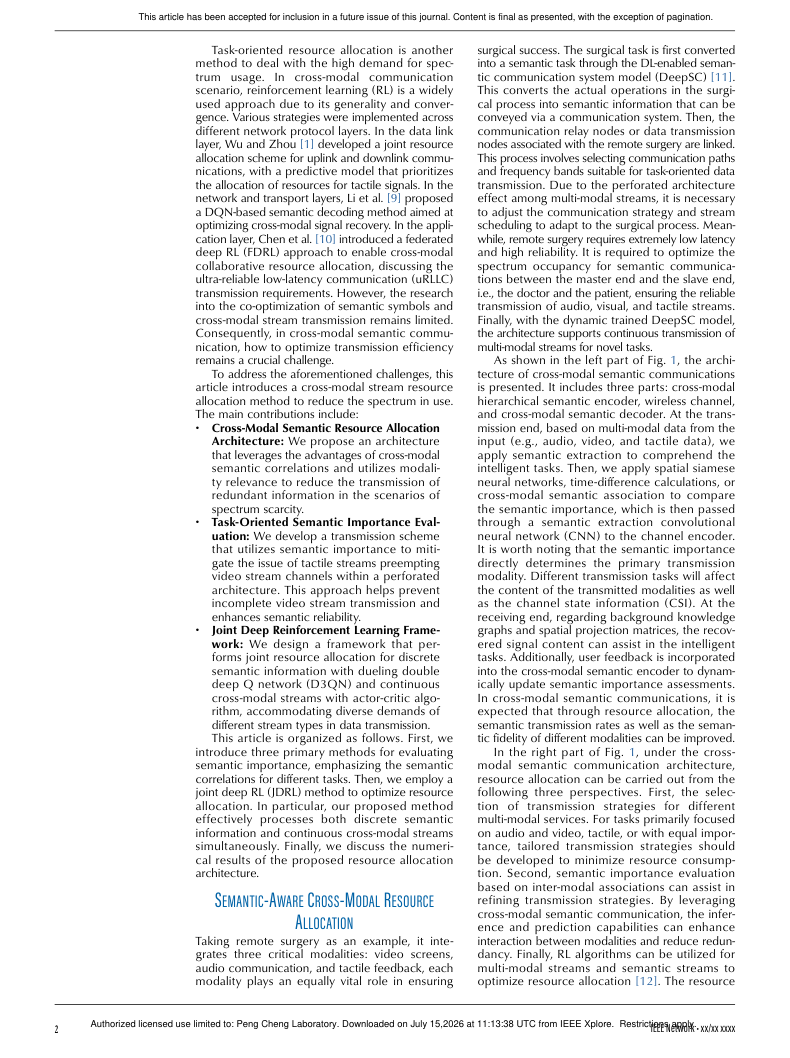
现有进展:在此之前,相关研究已证明语义编码器和面向任务链路建立了速率-质量曲线,使得优化无线电和计算资源以对任务效用进行优化成为可能。 PDF p.1PDF p.2
仍然存在的问题:尽管如此,确保多模态流的准确可靠传输仍是动态且资源有限环境中的关键挑战。 PDF p.1PDF p.2PDF p.7
为什么已有方法解决不了:固定或基于比特率的分配无法区分具有不同语义重要性的样本、用户和任务。它可能将功力和带宽浪费在低价值细节上,同时让任务质量对信道最敏感的用户感到饥饿。更具体地说,已有链路缺乏这里后来介绍的论文特有机制:通过利用跨模态语义通信,推理和预测能力可以增强模态间的交互,减少冗余。 PDF p.1PDF p.2PDF p.7
为什么这个问题值得研究:这个问题很重要,因为边缘设备往往需要及时做出决策,而不是忠实的复制品。仅发送任务足够的信息可以减少无线资源占用和延迟,但前提是关键证据能通过信道保存。 PDF p.1PDF p.2
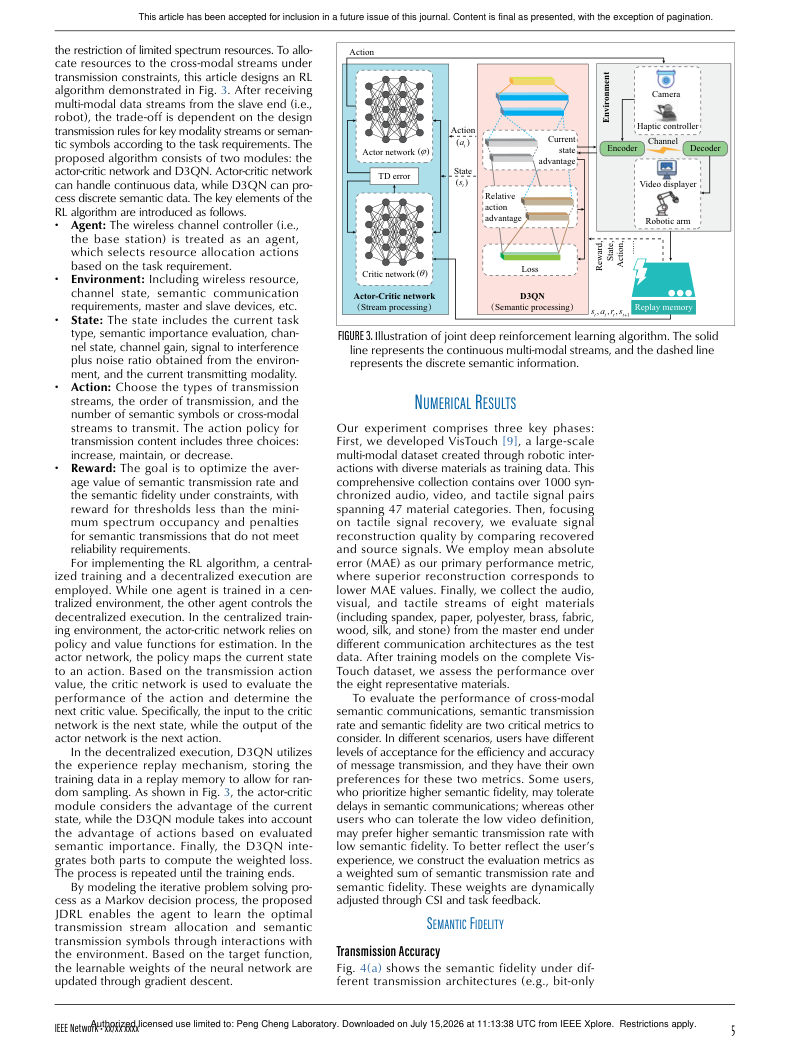
本文怎样顺着问题提出方案:因此,论文提出了跨模态语义通信的任务导向资源分配。其具体设计总结如下:本文发展了题目所述的方法:跨模态语义通信的任务导向资源分配。 PDF p.1PDF p.2
方案为什么有可能起作用:其因果联系在于,通过利用跨模态语义通信,推理和预测能力可以增强模态间的交互,减少冗余。语义重要性现在改变了分配决策,而非仅在资源确定后才评估。 PDF p.1PDF p.2PDF p.3
作者希望证明什么:论文测试了这种因果机制是否经得起公平的通信比较。报告的证据是:基于深度强化的联合资源分配 在跨模态通信中,提升传输速率和可靠性非常重要,如图2所示。 PDF p.4PDF p.6
系统怎么工作
该系统是任务导向推理的端到端通信链路。论文发展了题目所述的方法:跨模态语义通信的任务导向资源分配。通过利用跨模态语义通信,推理和预测能力可以增强模态间的互动,减少冗余。关键在于学习到的表征如何与所说的信道和资源约束相连接,而不仅仅是使用更大的神经网络。 PDF p.1PDF p.2PDF p.3
输入:源数据是源数据以及一个下游任务。 PDF p.1PDF p.2PDF p.3
发送端:发送方应用论文的语义/信源信道编码器:通过利用跨模态语义通信,推理和预测能力可以增强模态间的交互,减少冗余。 PDF p.1PDF p.2PDF p.3
实际发送:传输对象是由底层系统模型定义的语义速率、任务效用或信道使用变量。 PDF p.1PDF p.2PDF p.3
信道:传输遵循论文中评估的信道/资源模型;其处理方式总结为沿用底层语义通信链路或抽象速率模型。 PDF p.1PDF p.2PDF p.3
接收端:接收端从系统公式假设的接收机模型开始,应用所提出的解码器、推理模型或生成器。 PDF p.1PDF p.2PDF p.3
现有进展:在此之前,相关研究已证明语义编码器和面向任务链路建立了速率-质量曲线,使得优化无线电和计算资源以对任务效用进行优化成为可能。 PDF p.1PDF p.2PDF p.3
仍然存在的问题:然而,NOMA的有效性受到资源分配策略的显著影响[11]、[12]。 PDF p.1PDF p.2PDF p.13
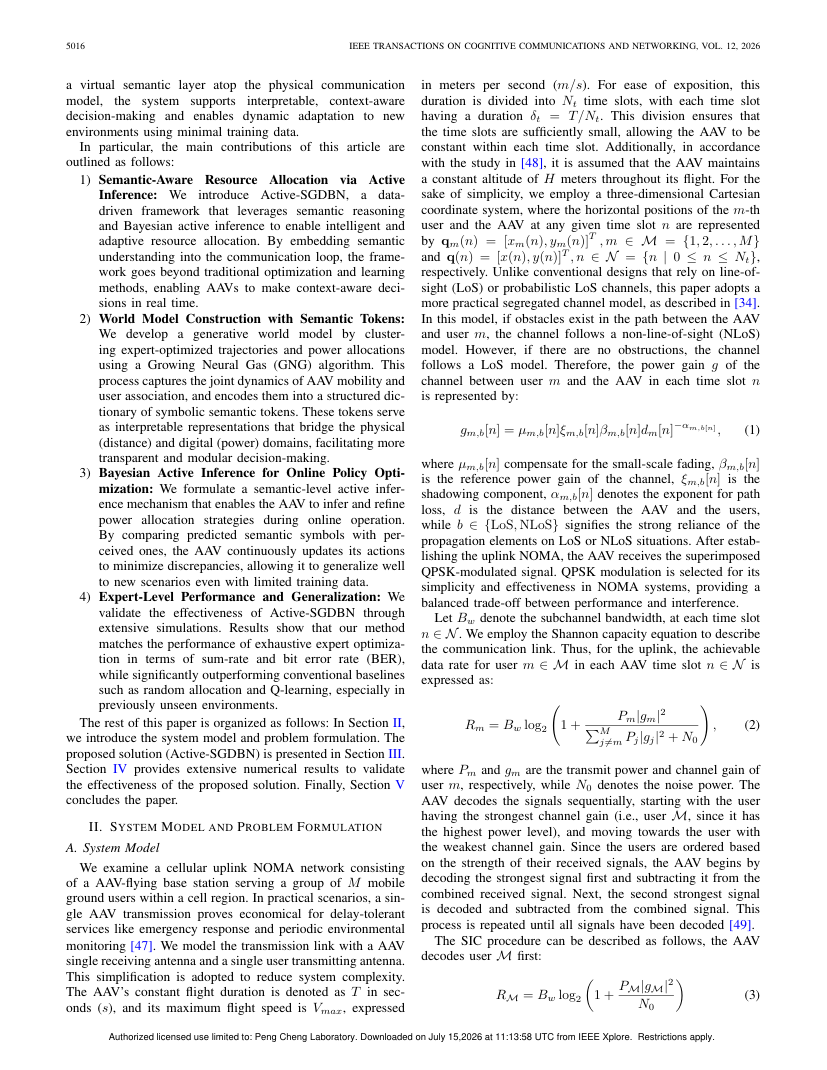
为什么已有方法解决不了:固定或基于比特率的分配无法区分具有不同语义重要性的样本、用户和任务。它可能将功力和带宽浪费在低价值细节上,同时让任务质量对信道最敏感的用户感到饥饿。更具体地说,已有链路缺少了本文随后引入的论文专用机制:所提出的框架名为主动语义广义动态贝叶斯网络(Active-SGDBN),在统一架构中集成了语义表示、结构化因果推理和贝叶斯主动推理。 PDF p.1PDF p.2PDF p.13
为什么这个问题值得研究:这个问题很重要,因为边缘设备往往需要及时做出决策,而不是忠实的复制品。仅发送任务足够的信息可以减少无线资源占用和延迟,但前提是关键证据能通过信道保存。 PDF p.1PDF p.2PDF p.3
本文怎样顺着问题提出方案:因此,本文提出了一项语义感知资源分配,适用于由贝叶斯主动推理赋能的新兴AAV-NOMA网络。其具体设计总结如下:论文发展了题目所述的方法:为新兴AAV-NOMA网络赋能的语义感知资源分配,由贝叶斯主动推理赋能。 PDF p.1PDF p.2PDF p.3
方案为什么有可能起作用:其因果联系在于,该框架名为主动语义广义动态贝叶斯网络(Active-SGDBN),将语义表示、结构化因果推理和贝叶斯主动推理整合在统一架构中。语义重要性现在改变了分配决策,而非仅在资源确定后才评估。 PDF p.1PDF p.2PDF p.3
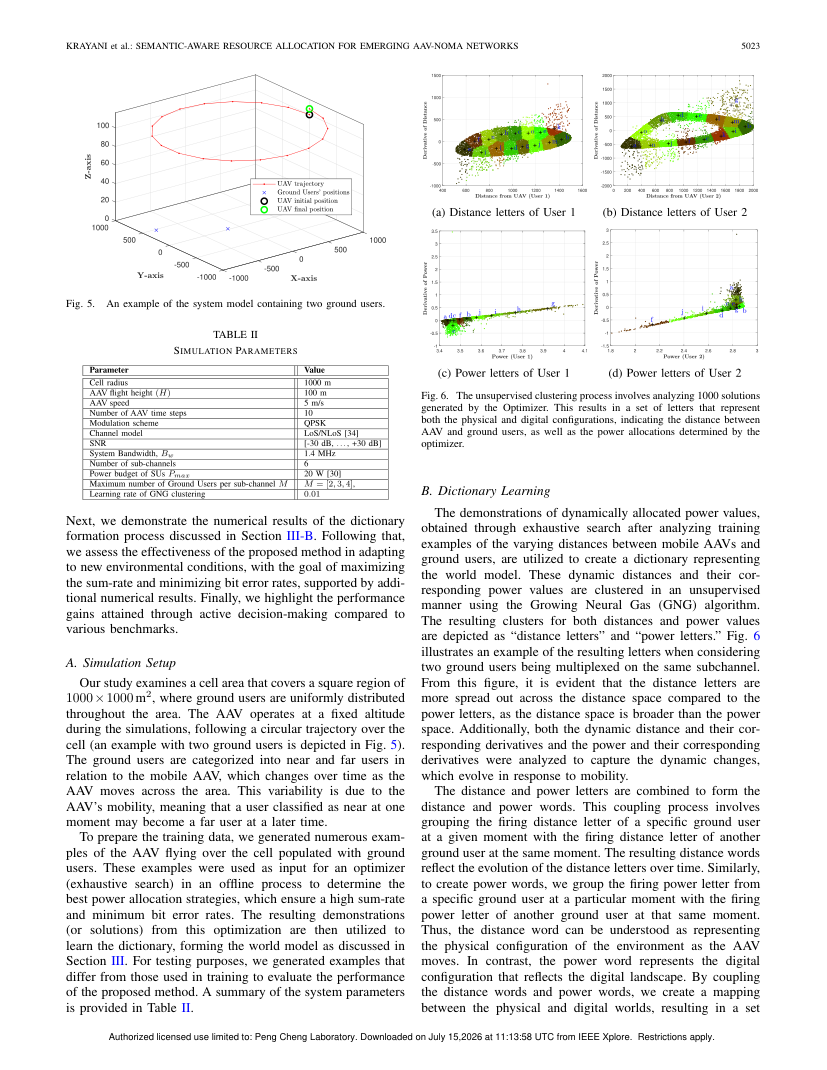
作者希望证明什么:论文测试了这种因果机制是否经得起公平的通信比较。据报道的证据是:这通过学习一个交互式过渡矩阵实现,该矩阵编码了AAV动作与世界代币之间的概率关系。 PDF p.8PDF p.9PDF p.10
系统怎么工作
该系统是任务导向推理的端到端通信链路。本文发展了题目所述的方法:为新兴AAV-NOMA网络提供语义感知资源分配,由贝叶斯主动推理赋能。该框架名为主动语义广义动态贝叶斯网络(Active-SGDBN),在统一架构中集成了语义表示、结构化因果推理和贝叶斯主动推理。关键在于学习到的表征如何与所说的信道和资源约束相连接,而不仅仅是使用更大的神经网络。 PDF p.1PDF p.2PDF p.3
输入:源数据是源数据以及一个下游任务。 PDF p.1PDF p.2PDF p.3
发送端:发送者应用了论文中的语义/信源信道编码器:所提出的框架名为主动语义广义动态贝叶斯网络(Active-SGDBN),在统一架构中集成了语义表示、结构化因果推理和贝叶斯主动推理。 PDF p.1PDF p.2PDF p.3
实际发送:传输对象是由底层系统模型定义的语义速率、任务效用或信道使用变量。 PDF p.1PDF p.2PDF p.3
信道:传输遵循论文中评估的信道/资源模型;其处理方式总结为沿用底层语义通信链路或抽象速率模型。 PDF p.1PDF p.3PDF p.10
接收端:接收端从系统公式假设的接收机模型开始,应用所提出的解码器、推理模型或生成器。 PDF p.1PDF p.2PDF p.3
A Semantic-Aware Resource Allocation for Emerging AAV-NOMA Networks Empowered by Bayesian Active Inference,原 PDF 第 3 页(架构/方法页)。A Semantic-Aware Resource Allocation for Emerging AAV-NOMA Networks Empowered by Bayesian Active Inference,原 PDF 第 10 页(关键结果页)。
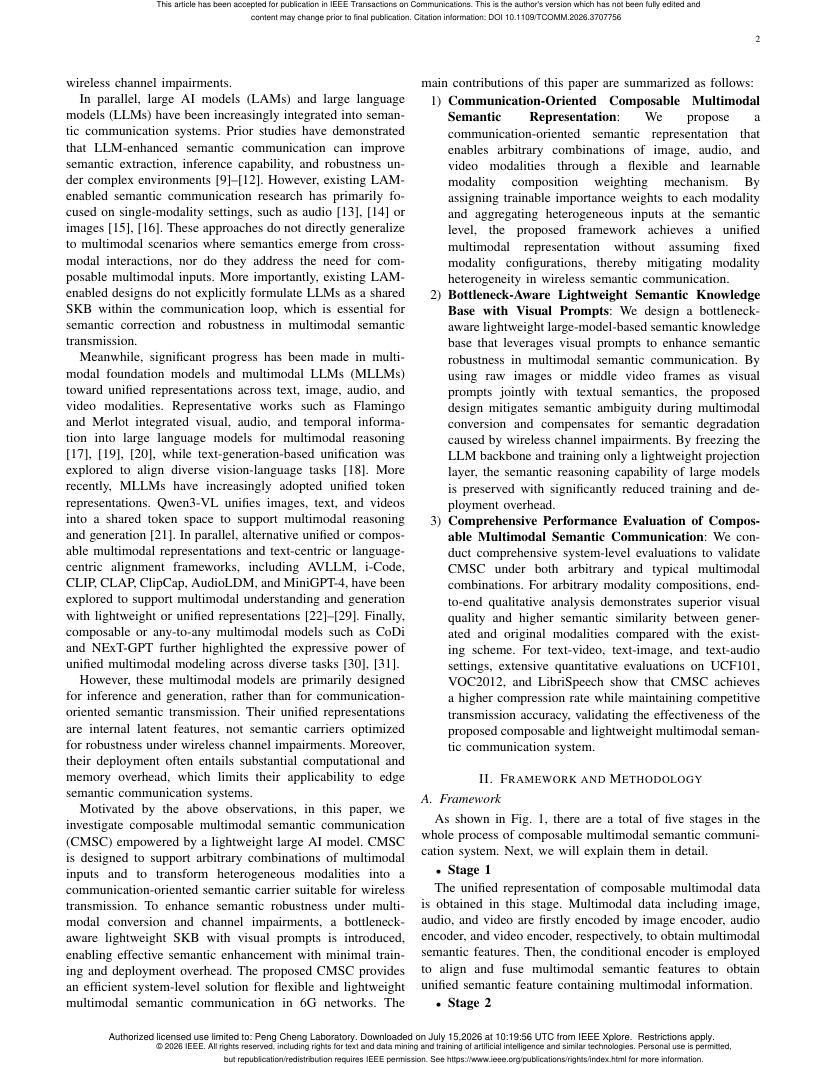
Composable Multimodal Semantic Communication: A Lightweight Large AI Model Approach
2026 · IEEE Transactions on Communications · 联合信源信道编码(JSCC)与语义信源编码
作者:Tantan Zhao; Fan Li; Xinyu Huang; Yiqun Liu; Arumugam Nallanathan
现有进展:在此之前,相关研究已证明深度联合信源信道编码表明压缩和信道鲁棒性可以同时学习,从而在有限的信道带宽下实现优雅的降级和强质量。 PDF p.2PDF p.3
仍然存在的问题:Qin 等人[6]调查了新兴的多模态语义通信方向,指出现有研究仍缺乏针对灵活模态组合的统一系统级解决方案。 PDF p.1PDF p.2PDF p.9
为什么已有方法解决不了:分离的压缩和信道编码,或忽略论文目标语义因子的端到端模型,可以优化不匹配的中间目标。所得表示并未明确针对此处研究的联合带宽、功耗、信道和语义质量约束而塑造。更具体地说,已有链路缺乏后来引入的论文专用机制:——多模态语义通信、可组合多模态表示、轻量级大型人工智能模型、带视觉提示的语义知识库、6G无处不在智能。 PDF p.1PDF p.2PDF p.9
为什么这个问题值得研究:这个问题很重要,因为即使波形失真仅有轻微变化,可理解性、识别准确性和丢包隐蔽也可能崩溃;一个有用的系统必须在低比特率和信道误差下保持语言内容。 PDF p.2PDF p.3
本文怎样顺着问题提出方案:因此,本文提出了《可组合多模态语义通信:一种轻量级大型人工智能模型方法》。其具体设计总结如下:论文开发了题目所述的方法:可组合多模态语义通信:一种轻量级大型人工智能模型方法。 PDF p.2PDF p.3
方案为什么有可能起作用:其因果联系是——多模态语义通信、可组合多模态表示、轻量级大型人工智能模型、带有视觉提示的语义知识库、6G无处不在智能。语义保真度和信道鲁棒性在同一路径上得到优化,因此瓶颈针对实际噪声链路而形成。 PDF p.1PDF p.2PDF p.3
作者希望证明什么:论文测试了这种因果机制是否经得起公平的通信比较。报告的证据是:结果显示LwGPT-4保持了高度参数高效的设计,仅有315万可训练参数,对应的可训练比值为0.0402%。 PDF p.6PDF p.7PDF p.8
系统怎么工作
该系统是语音/音频传输或识别的端到端通信链路。论文发展了题为《可组合多模态语义通信:一种轻量级大型人工智能模型方法》所描述的方法。——多模态语义通信、可组合多模态表示、轻量级大型人工智能模型、带视觉提示的语义知识库、6G无处不在智能。关键在于学习到的表征如何与所说的信道和资源约束相连接,而不仅仅是使用更大的神经网络。 PDF p.1PDF p.2PDF p.3
输入:信号来源是语音或音频。 PDF p.1PDF p.2PDF p.3
发送端:发送者应用论文的语义/信源信道编码器:——多模态语义通信、可组合多模态表示、轻量级大型人工智能模型、带视觉提示的语义知识库、6G无处不在智能。 PDF p.1PDF p.2PDF p.3
实际发送:传输对象是一个语义特征或潜在表示,其精确的位映射尚未完全指定。 PDF p.1PDF p.2PDF p.3
信道:传输遵循论文中评估的信道/资源模型;其处理方式总结为:信道接口报告不足或由传统链路抽象承担。 PDF p.5PDF p.10
接收端:接收方从被论文接收方假设的恢复语义特征开始,应用所提出的译码器、推理模型或生成器。 PDF p.1PDF p.2PDF p.3
发送方发送一个语义特征或潜在表示,其精确的位映射尚未完全指定。这被归类为:语义 特征/潜在;论文未给出完整量化到 bitstream 的接口。这一区别很重要,因为连续的神经符号、硬编码本 index和信道解码的bitstream以不同方式失效。 PDF p.2PDF p.3PDF p.6
通信成本通过论文声明的信道使用、压缩/带宽比、比特率、码率、令牌数量或分配的无线资源来解读。当论文未报告完整的比特级接口时,报告并未仅凭潜在维度发明比特率。 PDF p.2PDF p.3PDF p.6
信道怎样作用,接收端实际拿到什么
信道处理类别:信道接口报告不足或由传统链路抽象承担
在拟议的传输路径中,信道的处理方式如下:信道接口报告不足或由传统链路抽象承担。仅作为比较基线提及的LDPC、QAM或其他传统方案不用于分类拟议接收机。 PDF p.5PDF p.10
接收方实际上是从论文接收方假设的恢复语义特征出发。然后它重建语音波形、文本转录或识别结果。该陈述明确了学习到的译码器看到的是噪声连续符号、错误的离散变量、软信息,还是已经信道解码的表示。 PDF p.5PDF p.10
实验设置与主要结论
数据集:LibriSpeech
Baseline:DeepJSCC、BPG、JPEG、LDPC、DeepSC
指标:accuracy、semantic similarity、latency、CLIP
信道:AWGN、Rayleigh、Rician、fading channel
实验使用LibriSpeech;可与DeepJSCC、BPG、JPEG、LDPC、DeepSC进行比较;评估准确性、语义相似性、延迟性、CLIP;并使用AWGN、Rayleigh、Rician、衰落信道。一个代表性的报告工作条件是:必须同时读取精确的信噪比、带宽比和功耗约束,并附带相应的结果数据。 PDF p.5PDF p.10
结果显示,LwGPT-4保持了高度参数高效的设计,仅有3.15百万可训练参数,对应的可训练比为0.0402%。 PDF p.6PDF p.7PDF p.8
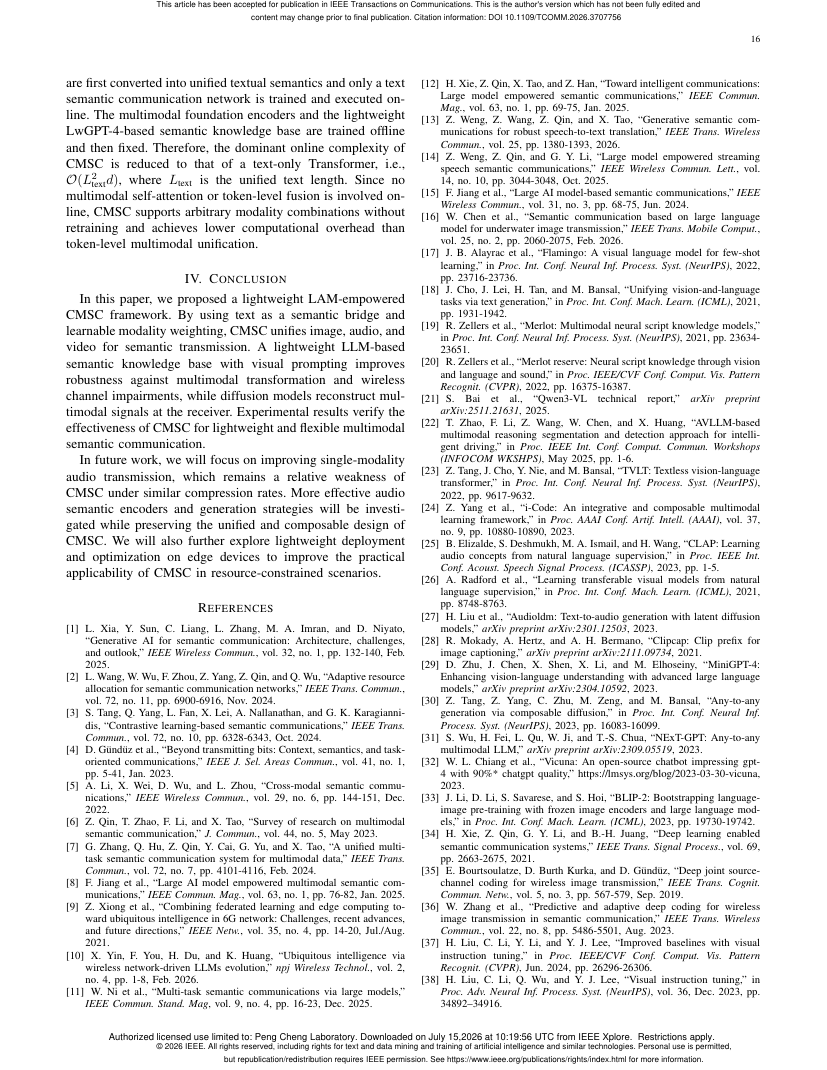
Composable Multimodal Semantic Communication: A Lightweight Large AI Model Approach,原 PDF 第 2 页(架构/方法页)。Composable Multimodal Semantic Communication: A Lightweight Large AI Model Approach,原 PDF 第 16 页(关键结果页)。
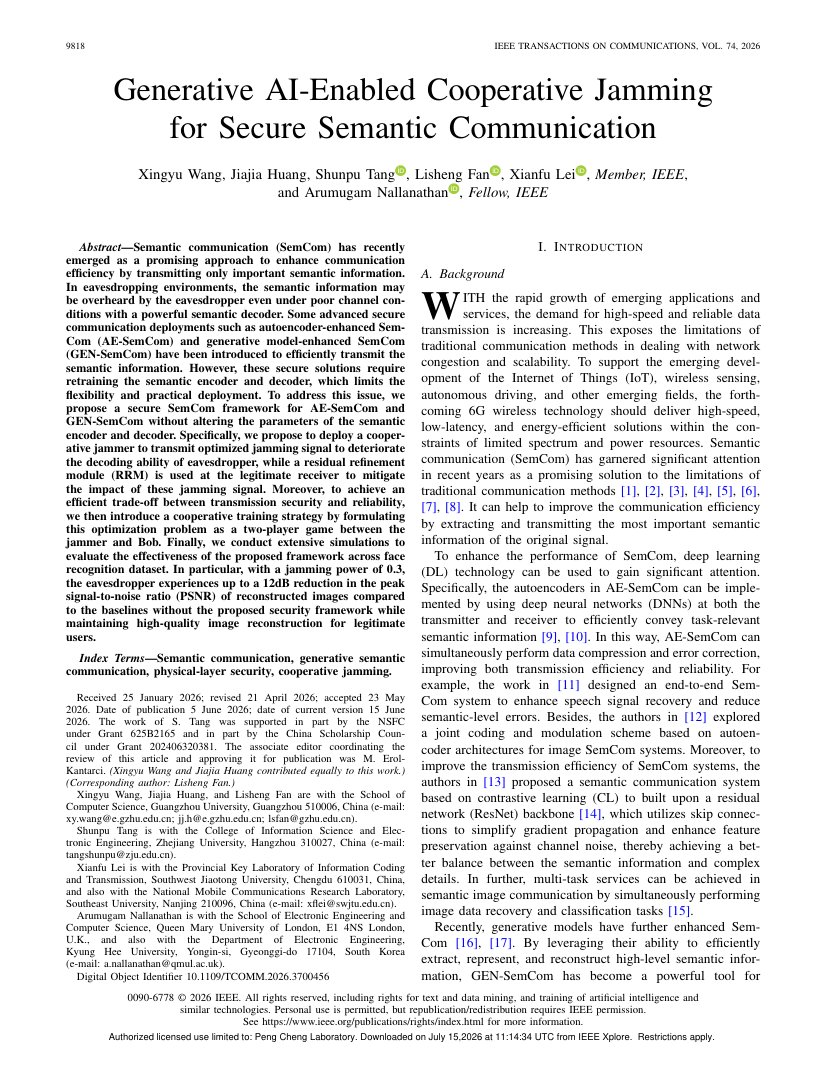
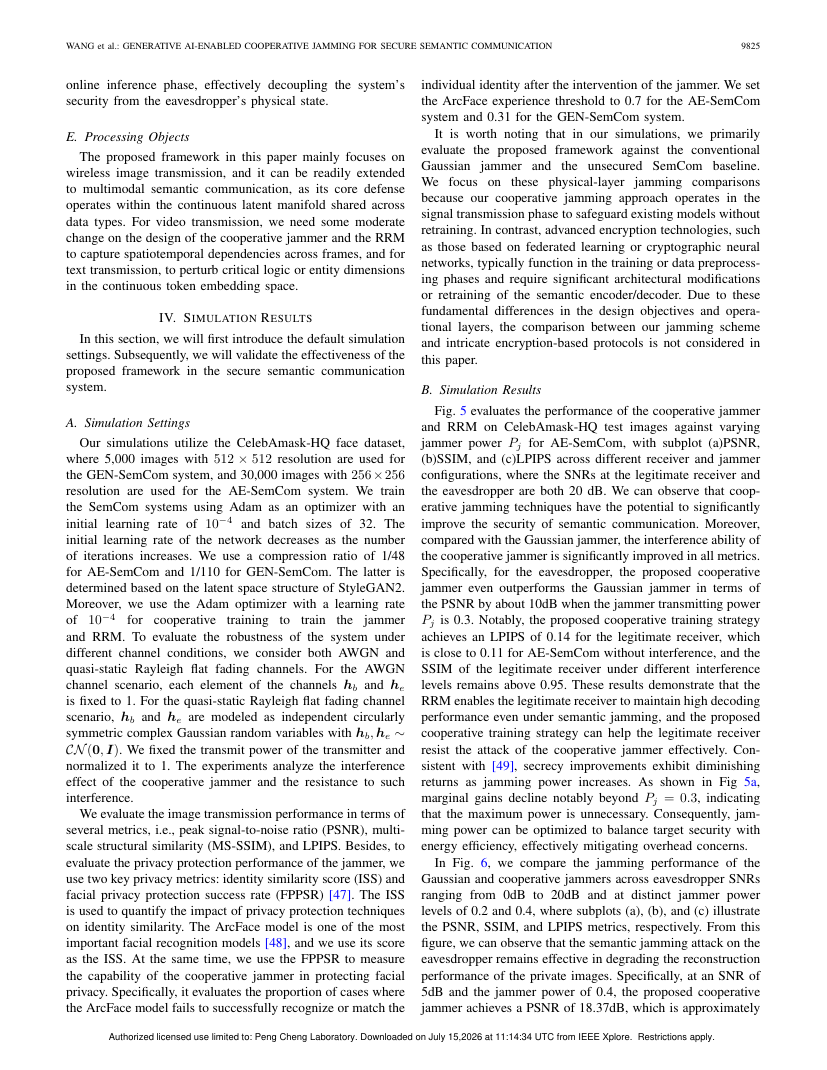
Generative AI-Enabled Cooperative Jamming for Secure Semantic Communication
2026 · IEEE Transactions on Communications · 通信安全与隐私
现有进展:在此之前,相关研究已证明端到端语义编码器能够以比重建型链路更少的信道资源保存合法接收方所需的信息。 PDF p.1
仍然存在的问题:这些安全解决方案需要重新训练语义编码器和解码器,这限制了灵活性和实际部署。 PDF p.1PDF p.8
为什么已有方法解决不了:早期以可靠性为导向的语义编码器优化了合法接收端,并未模拟窃听者、攻击者或好奇的服务器能从传输的表示中推断出的内容。因此,仅靠更好的重建无法消除语义泄露或操作风险。更具体地说,已有链路缺乏本文随后引入的论文特有机制:作者[19]设计了一种新颖的信道感知语义编码器用于图像传输,并为GEN-SemCom引入了动态码本更新机制以优化传输效率。 PDF p.1PDF p.8
为什么这个问题值得研究:问题之所以重要,是因为有限的信道使用迫使系统选择保护哪些视觉信息。感知或域关键结构可能比平均像素保真度更有价值,尤其是在低信噪比或高压缩率下。 PDF p.1
本文怎样顺着问题提出方案:因此,本文开发了生成式人工智能驱动的协同干扰技术,用于安全语义通信。其具体设计总结如下:论文开发了题目所述的方法:生成式人工智能赋能协同干扰以实现安全语义通信。 PDF p.1
方案为什么有可能起作用:因果联系在于,[19]作者设计了一种新型信道感知语义编码器用于图像传输,并引入了动态码本更新机制用于GEN-SemCom,以优化传输效率。威胁或隐私变量现在进入了训练或优化,同时涉及合法-接收者质量。 PDF p.1PDF p.2
作者希望证明什么:论文测试了这种因果机制是否经得起公平的通信比较。报告的证据是:为此,我们分别设计了干扰和RRM模块的安全丢失函数。 PDF p.6PDF p.7PDF p.8
系统怎么工作
该系统是图像传输或生成的端到端通信链路。论文开发了题目所述的方法:生成式人工智能赋能的协作干扰以实现安全语义通信。[19]的作者设计了一种新型信道感知语义编码器用于图像传输,并为GEN-SemCom引入了动态码本更新机制,以优化传输效率。关键在于学习到的表征如何与所说的信道和资源约束相连接,而不仅仅是使用更大的神经网络。 PDF p.1PDF p.2
输入:源是输入图像。 PDF p.1PDF p.2
发送端:发送方应用了论文中的语义/信源信道编码器:[19]的作者设计了一种新颖的信道感知语义编码器用于图像传输,并为GEN-SemCom引入了动态码本更新机制以优化传输效率。 PDF p.1PDF p.2
实际发送:传输对象是一个语义特征或潜在表示,其精确的位映射尚未完全指定。 PDF p.1PDF p.2
信道:传输遵循论文中评估的信道/资源模型;其处理方式总结为:信道接口报告不足或由传统链路抽象承担。 PDF p.1PDF p.3PDF p.4
接收端:接收方从被论文接收方假设的恢复语义特征开始,应用所提出的译码器、推理模型或生成器。 PDF p.1PDF p.2
发送方发送一个语义特征或潜在表示,其精确的位映射尚未完全指定。这被归类为:语义 特征/潜在;论文未给出完整量化到 bitstream 的接口。这一区别很重要,因为连续的神经符号、硬编码本 index和信道解码的bitstream以不同方式失效。 PDF p.2PDF p.8
通信成本通过论文声明的信道使用、压缩/带宽比、比特率、码率、令牌数量或分配的无线资源来解读。当论文未报告完整的比特级接口时,报告并未仅凭潜在维度发明比特率。 PDF p.2PDF p.8
信道怎样作用,接收端实际拿到什么
信道处理类别:信道接口报告不足或由传统链路抽象承担
在拟议的传输路径中,信道的处理方式如下:信道接口报告不足或由传统链路抽象承担。仅作为比较基线提及的LDPC、QAM或其他传统方案不用于分类拟议接收机。 PDF p.1PDF p.3PDF p.4
接收方实际上是从论文接收方假设的恢复语义特征出发。然后它会重建或生成的图像。该陈述明确了学习到的译码器看到的是噪声连续符号、错误的离散变量、软信息,还是已经信道解码的表示。 PDF p.1PDF p.3PDF p.4
实验设置与主要结论
数据集:论文未在结构化字段中明确列出
Baseline:论文未在结构化字段中明确列出
指标:PSNR、SSIM、MS-SSIM、LPIPS、accuracy、latency
信道:AWGN、Rayleigh、fading channel、MIMO
实验使用论文中所述的源/任务数据集;与论文中标明的参考系统进行比较;用PSNR、SSIM、MS-SSIM、LPIPS、准确性和延迟进行评估;并使用AWGN、Rayleigh、衰落信道、MIMO。一个代表性的报告工作条件是:必须同时读取精确的信噪比、带宽比和功耗约束,并附带相应的结果数据。 PDF p.1PDF p.3PDF p.4
现有进展:在此之前,相关研究已证明端到端语义编码器能够以比重建型链路更少的信道资源保存合法接收方所需的信息。 PDF p.1PDF p.2
仍然存在的问题:即使合法接收者重建良好,语义表示仍可能泄露源内容或控;仅限可靠性的设计无法量化这一威胁。 PDF p.1PDF p.2PDF p.11
为什么已有方法解决不了:早期以可靠性为导向的语义编码器优化了合法接收端,并未模拟窃听者、攻击者或好奇的服务器能从传输的表示中推断出的内容。因此,仅靠更好的重建无法消除语义泄露或操作风险。更具体地说,已有链路缺乏本文随后引入的论文专用机制:提出了一个语义感知噪声多头自注意(SN-MSA)模块,通过联合考虑CSI和语义噪声图,有效保护语义特征。 PDF p.1PDF p.2PDF p.11
为什么这个问题值得研究:问题之所以重要,是因为有限的信道使用迫使系统选择保护哪些视觉信息。感知或域关键结构可能比平均像素保真度更有价值,尤其是在低信噪比或高压缩率下。 PDF p.1PDF p.2
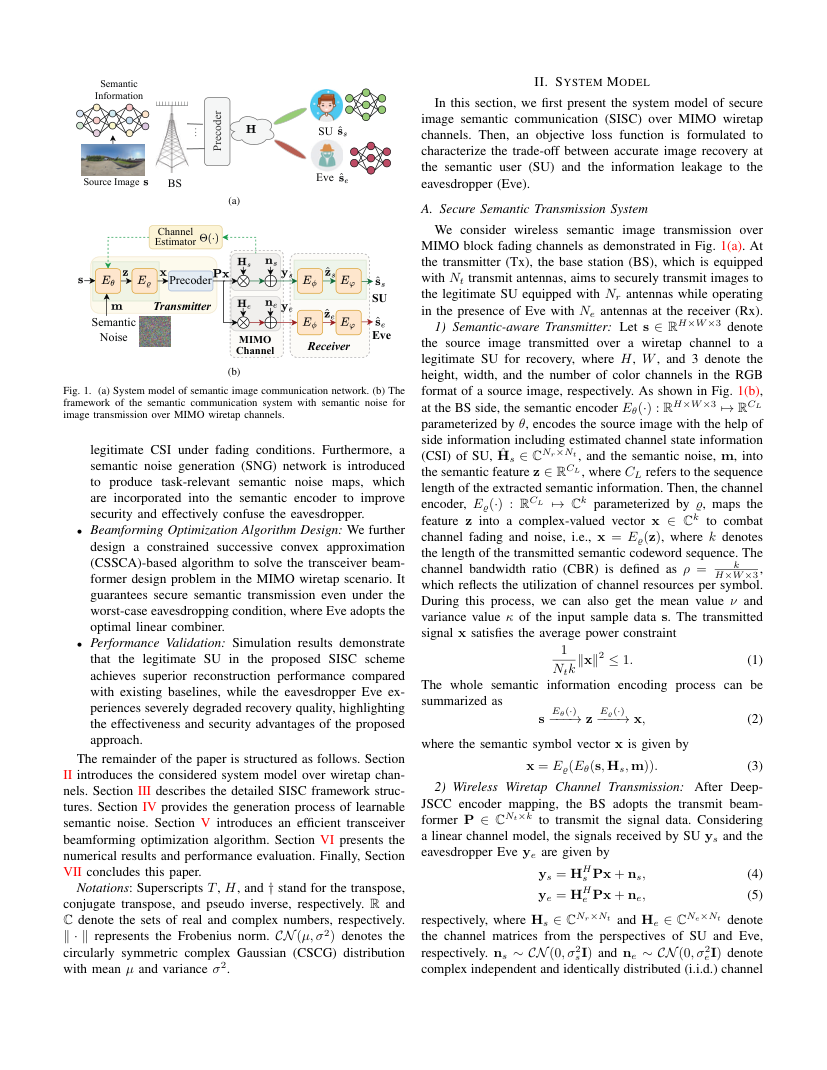
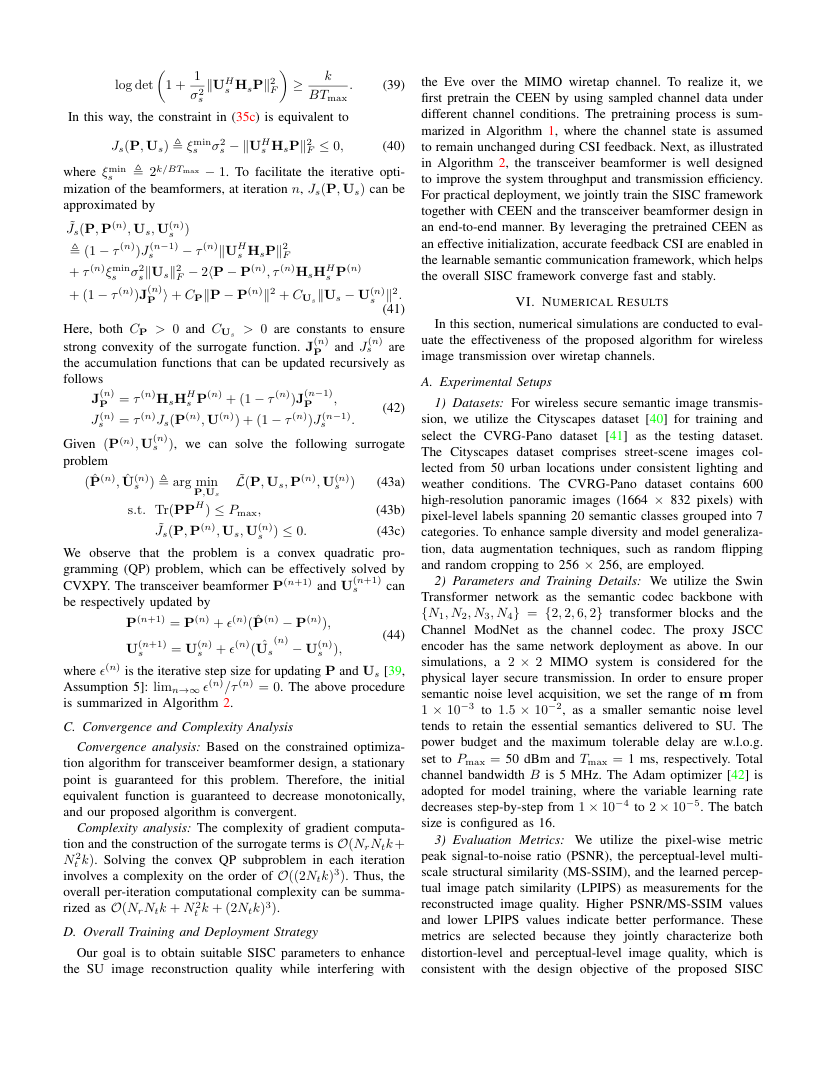
本文怎样顺着问题提出方案:因此,本文开发了基于MIMO衰落信道的语义噪声辅助安全图像传输。其具体设计总结如下:论文发展了题目所述的方法:MIMO衰落信道上的语义噪声辅助安全图像传输。 PDF p.1PDF p.2
方案为什么有可能起作用:其因果联系在于,提出了一个语义噪声感知多头自注意(SN-MSA)模块,通过共同考虑CSI和语义噪声映射,有效保护语义特征。威胁或隐私变量现在进入了训练或优化,同时涉及合法-接收者质量。 PDF p.1PDF p.2PDF p.3
作者希望证明什么:论文测试了这种因果机制是否经得起公平的通信比较。报告证据为:基于方程(22)中的修正注意力分数,SN-MSA网络中的双重CSI-SN融合模块在不同信道条件下改善了自然分裂的注意力分布。 PDF p.6PDF p.7PDF p.10
系统怎么工作
该系统是图像传输或生成的端到端通信链路。论文开发了题目所述的方法:MIMO衰落信道上的语义噪声辅助安全图像传输。提出了一个语义噪声感知多头自注意(SN-MSA)模块,通过联合考虑CSI和语义噪声映射,有效保护语义特征。关键在于学习到的表征如何与所说的信道和资源约束相连接,而不仅仅是使用更大的神经网络。 PDF p.1PDF p.2PDF p.3
输入:源是输入图像。 PDF p.1PDF p.2PDF p.3
发送端:发送方应用论文中的语义/信源信道编码器:提出了一个语义噪声感知多头自注意(SN-MSA)模块,通过共同考虑CSI和语义噪声映射,有效保护语义特征。 PDF p.1PDF p.2PDF p.3
实际发送:传输对象是一个语义特征或潜在表示,其精确的位映射尚未完全指定。 PDF p.1PDF p.2PDF p.3
信道:传输遵循论文中评估的信道/资源模型;其处理方式总结为:信道接口报告不足或由传统链路抽象承担。 PDF p.2PDF p.4PDF p.11
接收端:接收方从被论文接收方假设的恢复语义特征开始,应用所提出的译码器、推理模型或生成器。 PDF p.1PDF p.2PDF p.3
发送方发送一个语义特征或潜在表示,其精确的位映射尚未完全指定。这被归类为:语义 特征/潜在;论文未给出完整量化到 bitstream 的接口。这一区别很重要,因为连续的神经符号、硬编码本 index和信道解码的bitstream以不同方式失效。 PDF p.3PDF p.5PDF p.11
通信成本通过论文声明的信道使用、压缩/带宽比、比特率、码率、令牌数量或分配的无线资源来解读。当论文未报告完整的比特级接口时,报告并未仅凭潜在维度发明比特率。 PDF p.3PDF p.5PDF p.11
信道怎样作用,接收端实际拿到什么
信道处理类别:信道接口报告不足或由传统链路抽象承担
在拟议的传输路径中,信道的处理方式如下:信道接口报告不足或由传统链路抽象承担。仅作为比较基线提及的LDPC、QAM或其他传统方案不用于分类拟议接收机。 PDF p.2PDF p.4PDF p.11
接收方实际上是从论文接收方假设的恢复语义特征出发。然后它会重建或生成的图像。该陈述明确了学习到的译码器看到的是噪声连续符号、错误的离散变量、软信息,还是已经信道解码的表示。 PDF p.2PDF p.4PDF p.11
实验设置与主要结论
数据集:Cityscapes
Baseline:BPG、LDPC、WITT
指标:PSNR、SSIM、MS-SSIM、LPIPS、accuracy、throughput
信道:Rayleigh、fading channel、MIMO、OFDM
实验使用城市景观;与BPG、LDPC、WITT比较;用PSNR、SSIM、MS-SSIM、LPIPS、准确率、吞吐量等方法进行评估;并使用Rayleigh、衰落信道、MIMO、OFDM。一个代表性的报告工作条件是:必须同时读取精确的信噪比、带宽比和功耗约束,并附带相应的结果数据。 PDF p.2PDF p.4PDF p.11
基于方程(22)中的修正注意力评分,SN-MSA网络中的双重CSI-SN融合模块在不同信道条件下改善了SU的注意力分布。 PDF p.6PDF p.7PDF p.10
Semantic Noise-Aided Secure Image Transmission Over MIMO Fading Channels,原 PDF 第 3 页(架构/方法页)。Semantic Noise-Aided Secure Image Transmission Over MIMO Fading Channels,原 PDF 第 10 页(关键结果页)。
排除与边界记录
这些条目在检索中出现,但因预印本、综述/愿景、MDPI、主题边界或被期刊扩展版取代而未进入核心表。
年份
标题
原因
2021
Semantic Communication Systems for Speech Transmission
非正式期刊/会议技术论文类型:preprint
2021
Semantic Communications for Speech Recognition
非正式期刊/会议技术论文类型:preprint
2021
Task-Oriented Multi-User Semantic Communications
非正式期刊/会议技术论文类型:preprint
2021
Task-Oriented Multi-User Semantic Communications for Multimodal Data
非正式期刊/会议技术论文类型:preprint
2021
Task-Oriented Multi-User Semantic Communications for VQA Task
非正式期刊/会议技术论文类型:preprint
2021
Task-Oriented Semantic Communications for Multimodal Data.
非正式期刊/会议技术论文类型:preprint
2022
A Robust Deep Learning Enabled Semantic Communication System for Text
非正式期刊/会议技术论文类型:preprint
2022
A Unified Multi-Task Semantic Communication System for Multimodal Data
非正式期刊/会议技术论文类型:preprint
2022
A Unified Multi-Task Semantic Communication System with Domain Adaptation
非正式期刊/会议技术论文类型:preprint
2022
Deep Learning Enabled Semantic Communications with Speech Recognition and Synthesis
非正式期刊/会议技术论文类型:preprint
2022
Goal-Oriented Semantic Communications for 6G Networks
非正式期刊/会议技术论文类型:preprint
2022
Vector Quantized Semantic Communication System
非正式期刊/会议技术论文类型:preprint
2023
Contrastive Learning based Semantic Communication for Wireless Image Transmission
非正式期刊/会议技术论文类型:preprint
2023
Semantic Communication with Memory
非正式期刊/会议技术论文类型:preprint
2023
Vector Quantized Semantic Communication System
非正式期刊/会议技术论文类型:preprint
2024
A Robust Semantic Communication System for Image
非正式期刊/会议技术论文类型:preprint
2024
Federated Contrastive Learning for Personalized Semantic Communication
非正式期刊/会议技术论文类型:preprint
2024
Generative Artificial Intelligence (GAI) for Mobile Communications: A Diffusion Model Perspective
非正式期刊/会议技术论文类型:preprint
2024
Hybrid Digital-Analog Semantic Communications
非正式期刊/会议技术论文类型:preprint
2025
A Robust Image Semantic Communication System With Multi-Scale Vision Transformer
综述、教程、愿景或编者按,非正式技术研究论文
2025
Image Semantic Communication with Quadtree Partition-based Coding
非正式期刊/会议技术论文类型:preprint
2021
Semantic Communications for Speech Recognition
存在同团队、同方法家族且作者高度重合的正式期刊扩展版;按既定口径由期刊版取代:Deep Learning Enabled Semantic Communications With Speech Recognition and Synthesis (IEEE TWC, 2023)
2021
Semantic Communications for Speech Signals
存在同团队、同方法家族且作者高度重合的正式期刊扩展版;按既定口径由期刊版取代:Semantic Communication Systems for Speech Transmission (IEEE JSAC, 2021)
2022
A Robust Deep Learning Enabled Semantic Communication System for Text
存在同团队、同方法家族且作者高度重合的正式期刊扩展版;按既定口径由期刊版取代:A Robust Semantic Text Communication System (IEEE TWC, 2024)
2022
A Unified Multi-Task Semantic Communication System with Domain Adaptation
存在同团队、同方法家族且作者高度重合的正式期刊扩展版;按既定口径由期刊版取代:A Unified Multi-Task Semantic Communication System for Multimodal Data (IEEE TCOM, 2024)
2023
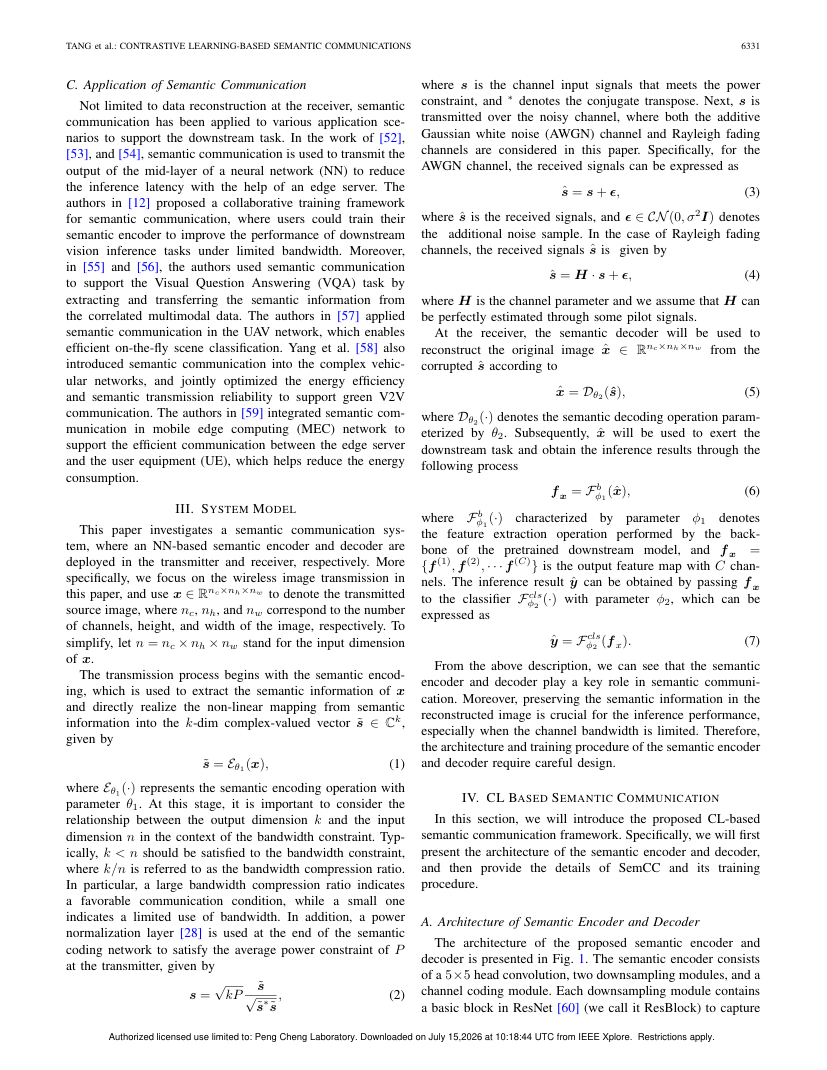
Contrastive Learning based Semantic Communication for Wireless Image Transmission